
Minimum Wage 2026: BNS Calls for 5,000 RON Gross from 2027, Following a 13% Loss in Purchasing Power
BNS says the minimum wage increase has been delayed by 6 months, and 1.76 million employees have lost 13% of their purchasing power. The union is calling for a gross minimum wage of 5,000 RON from 1 January 2027.
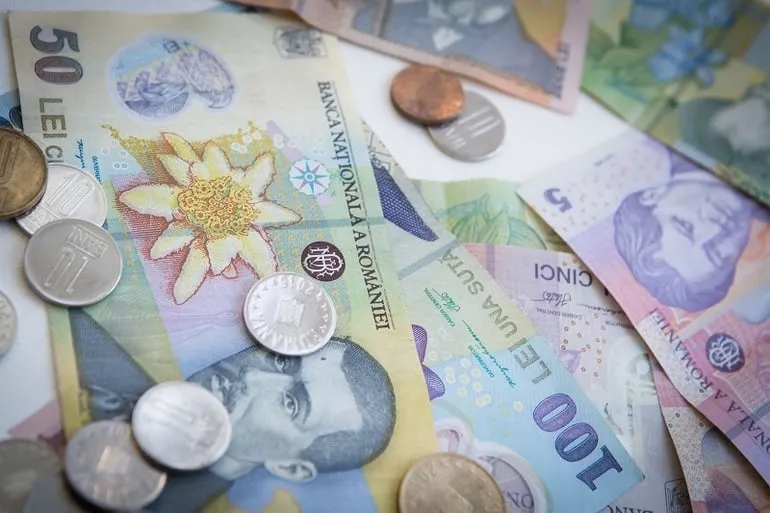
 Foto ilustrativă
The National Trade Union Bloc (BNS) has warned that the increase to the national gross minimum wage, due to take effect from 1 July 2026, has been delayed by six months beyond the statutory deadline. Under Law no. 283/2024 on adequate minimum wages, the new figure should have come into force as early as 1 January 2026.
Under the mechanism established by the law, the minimum wage was to be set at between 4,325 RON (as calculated by the applicable formula) and 4,590 RON (equivalent to 52% of the average gross wage). BNS maintains that the Government opted for the lowest possible figure and further postponed its implementation until July 2026.
"The Government delayed the minimum wage increase by six months, and the cost was borne by employees (…) workers paid at the minimum wage, as well as those earning between 4,050 and 4,325 RON — approximately 1.76 million employees — became bargaining chips in negotiations between the Government and the business community," the BNS statement reads.
Almost 1.76 million employees affected
The trade union notes that this income bracket includes both employees paid exactly at the minimum wage and those earning between 4,050 and 4,325 RON gross. BNS considers that the postponement of the increase was used as a form of compensation for the business community, in the context of other recent economic decisions: energy market liberalisation, a rise in VAT, higher excise duties, and the introduction of a turnover tax. According to the union, some of these costs have fed through into prices, hitting vulnerable workers twice over — through the delayed wage increase and through subsequent price rises.
340 RON lost over 18 months
According to figures presented by BNS, in 2025 the purchasing power of the net minimum wage (2,574 RON) fell by approximately 227 RON per month. Inflation in the first half of 2026 is estimated to have added a further loss of around 111 RON per month.
In total, over 18 months, employees on the minimum wage are estimated to have lost approximately 340 RON in monthly purchasing power, representing around 13% of their income. BNS points out that the increase applied from 1 July 2026 does not cover this loss, and that the reduction of the tax deduction from 300 to 200 RON further diminishes the effective value of the wage rise.
"The minimum wage level is not adequate"
The union cites European Directive 2022/2041 and ILO Convention 130/1970 to argue that the current minimum wage does not meet European criteria for an adequate minimum income.
"It comes as no surprise that Romania continues to rank among the highest in the European Union for in-work poverty (…) BNS highlighted, at the time of transposing Directive 2022/2041, the need to introduce into law correction mechanisms for minimum wage increases in cases where significant variations arise between the projected and actual levels of the indicators used," the BNS statement reads.
The union explains that for 2025, a forecast average inflation rate of 4.4% was used, even though actual inflation came in at 7.3%. For 2026, the minimum wage calculation was based on a projected inflation rate of 5.8%, which has since been revised upward to 7.9%.
BNS calls for 5,000 RON gross from 1 January 2027
The union is calling for negotiations between the Government, employers' organisations, and trade unions to be reopened in order to set the minimum wage that will come into force on 1 January 2027. BNS is demanding that the new level be set at 5,000 RON gross, a figure it considers necessary to recover the purchasing power losses accumulated over the past two years and to comply with European principles on an adequate minimum wage.
BNS also draws attention to the fact that the minimum wage legislation should have put an end to its use as an electoral tool or a bargaining instrument with the business community: "The minimum wage must be set transparently and must be capable of meeting the needs of workers and their families (…) Minimum wages that ensure a decent standard of living can contribute to reducing poverty, supporting domestic demand and purchasing power," the statement adds.
The union warns that, without a correction mechanism that accounts for the gap between projected and actual inflation, the lowest-paid employees risk continuing to lose ground in terms of purchasing power.
Content paraphrased and adapted by SeniorHelp from verified public sources.
Original source: Realitatea →Previous article
Case of care homes in Bihor: 411 people assessed, 388 relocated, announces the Ministry of Health
Next article
Gross minimum wage rises to 4,325 RON from 1 July. What it means for employees and employers
Similar news
New law: savings and investment accounts for retirement, based on the American 401(k) model
16 October 2026
Pensions indexed from 2027 and capped salaries: what the Niculescu Government's programme provides for
15 October 2026

Niculescu Government promises extended energy bill support and gradual gas liberalisation
15 October 2026

AUR proposes retirement at 60 for people diagnosed with cancer
15 October 2026
College of Physicians calls for government reforms: on-call duties paid at 2017 salary levels
14 October 2026
 Foto ilustrativă
Patients with chronic illnesses warn they risk running out of treatments. Appeal to authorities
14 October 2026