
Rogobete: the pay law could trigger an unprecedented exodus of doctors
The former Health Minister warns that the new pay law could reduce the incomes of ICU doctors by 3,000–4,000 RON, putting hospital staff at risk.
 Foto ilustrativă
Former Health Minister Alexandru Rogobete is raising the alarm about the current form of the pay legislation, which he considers dangerous for the Romanian healthcare system. He warns that the proposed income reductions would hit particularly hard the specialties already under pressure: intensive care, emergency medicine, surgery, and cardiology.
Rogobete describes the bill as "a disaster" for healthcare, stressing that the negative effects will be felt not only immediately, but also in the medium and long term.
Income cuts of up to 4,000 RON for intensive care doctors
When asked whether the law could be withdrawn, as healthcare unions are demanding, the former minister said he could not predict such a decision, but strongly criticised the current version of the bill: "It's hard to say whether it will be withdrawn or not. What is certain is that the current version of the pay legislation for healthcare is a disaster."
According to Rogobete, in certain circumstances, the salaries of intensive care doctors could fall by between 3,000 and 4,000 RON. "This is not just a short-term disaster, but a medium and long-term one. Imagine that salaries for intensive care doctors, for example, drop by between 3,000 and 4,000 RON in certain situations," he explained.
A potential wave of departures from critical specialties
The former minister fears that the reduction in earnings will drive a large number of doctors to leave Romania, particularly from fields where staff shortages are already acute: "There will be an unprecedented exodus of doctors from certain specialties — intensive care, emergency medicine, surgery, cardiology. This exodus had come to a halt in recent times."
He recalled that in recent years, a number of Romanian doctors working in France, Germany, and other countries had chosen to return home, drawn by better salaries and improved working conditions in hospitals: "Romanians who had been practising in France, in Germany, or in other countries decided to come back home. Precisely because pay was reasonably adequate and conditions had begun to improve. Either way, with this law, the exodus will continue and there will be no more predictability."
Direct impact on patients
Rogobete highlights that the departure of doctors would directly affect patients and the functioning of hospitals: "Patients will arrive at hospital and will not be able to have surgery because the anaesthetist is in France." He notes that no one disputes the chronic staff shortages in healthcare, but argues that cutting employees' pay is not the right solution.
Calls for reform of the National Health Insurance House
The former minister argues that genuine reform should begin with the way hospitals are funded, by updating the tariffs paid by the National Health Insurance House to reflect 2026 costs. "If the outgoing Prime Minister truly wished to carry out reform, that reform should be at the National Health Insurance House. If tariffs were increased and brought in line with 2026, for example, and hospitals were paid at today's costs rather than those of ten years ago, that percentage would automatically decrease and things would return to normal," concluded Alexandru Rogobete.
Content paraphrased and adapted by SeniorHelp from verified public sources.
Original source: Realitatea →Previous article
Sanitas Confirms General Strike: Nearly 400 Hospitals to Join Protest, Emergency Services to Remain Operational
Next article
Rogobete: the pay law risks triggering a new exodus of doctors from hospitals
Similar news

Eurostat: Bucharest-Ilfov, third highest growth in the EU (33%), but South Muntenia and Oltenia fell by over 11%
23 October 2026

Romania, the Largest Budget Deficit in the EU in Q2 2026, Eurostat Data Shows
22 October 2026
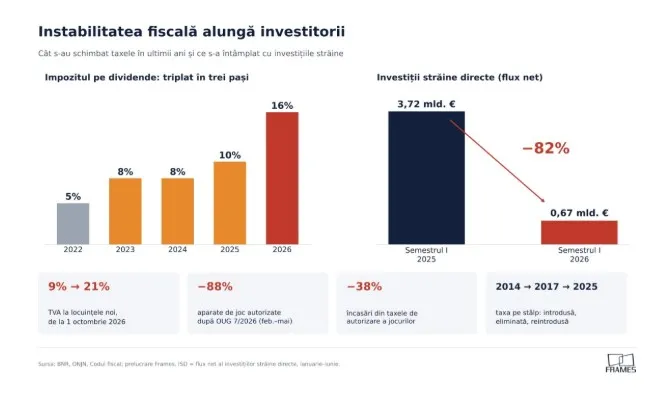
Economists Call for Stable Taxes Over 3–5 Years: Foreign Investment in Romania Has Dropped by 82%
21 October 2026
 Foto ilustrativă
Financial crisis in hospitals: funds left for only two more weeks, 8 billion RON needed
21 October 2026
 Foto ilustrativă
Food prices are rising again: economists warn about 2027 prices
19 October 2026

Beijing will become a "super-ageing" city by 2035
19 October 2026