
Home Medical Care Reimbursed by the Health Insurance House: Conditions and Duration (up to 180 days)
Housebound patients can receive consultations or medical care at home. Reimbursement for specialised care requires insured status, a medical referral, and an ECOG performance status of 3 or 4.
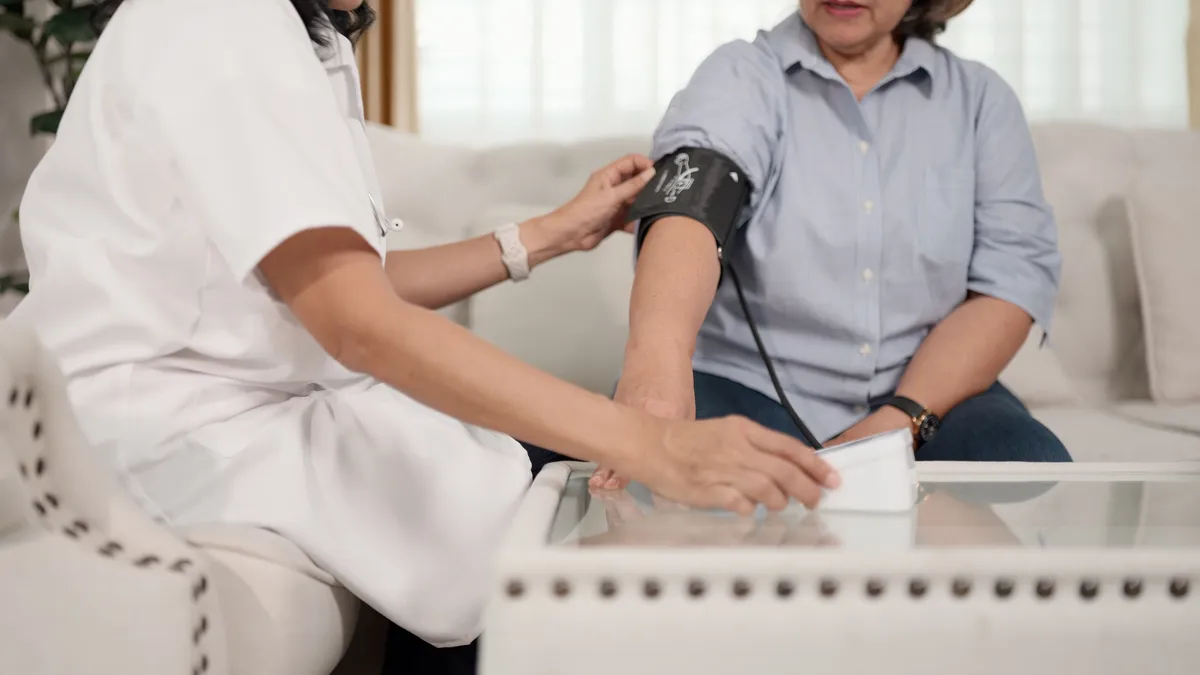
Patients who are unable to travel to a medical practice may, under current legislation, receive consultations or medical care at home through the public health system. Home visits from a GP are also available to uninsured persons, provided they are registered on the GP's patient list. However, reimbursement for services provided by specialist home care providers requires the patient to hold insured status, to have a medical referral, and to meet the applicable eligibility criteria.
Two categories of services, with different rules
Government Decision No. 521/2023, in the updated form published by the National Health Insurance House (CNAS), treats GP home consultations and the home medical care package as separate matters. The former falls under primary medical care. The latter covers interventions such as administering treatments or wound care, carried out by providers holding contracts with health insurance funds.
This distinction is important for uninsured persons: the fact that they may receive a home consultation under the minimal package does not automatically entitle them to the full home care package intended for insured patients. Each category has its own conditions for provision.
Who may receive a home consultation from a GP
Home consultations are available to persons registered on a GP's patient list, within the dedicated home visit programme. The following are entitled to these consultations:
- patients who are unable to travel due to permanent or temporary disability;
- patients with chronic conditions or an acute episode that prevents them from attending the practice;
- children aged between 0 and 1 year;
- children aged between 0 and 18 years, diagnosed with infectious and contagious diseases;
- women in the postnatal period.
These provisions apply to both the minimal package, which is available to uninsured persons as well, and the basic package.
Who is eligible for reimbursed home medical care
For home care under the basic package, assessment takes into account the insured person's level of autonomy. The regulations stipulate that these services are provided "only for insured persons with an ECOG performance status of 3 or 4".
- ECOG 3 – the patient is unable to carry out household activities, spends more than half the day in bed or in a chair, and requires assistance with personal hygiene, feeding, or mobility;
- ECOG 4 – the patient is completely confined to bed and is wholly dependent on another person for basic care.
A diagnosis alone is therefore not sufficient to qualify for these services. The referring doctor must assess the need for interventions and document the patient's functional classification according to the ECOG scale.
Who issues the referral and what it must contain
The referral for home care (Form Annex 31 C) may be issued by a GP, a specialist working in outpatient care, or a hospital doctor, provided they hold a contract with the health insurance funds.
The form must include the diagnosis, the patient's ECOG status, and the recommended frequency of services. Health insurance funds will not reimburse incomplete referrals or those in which the provider assigned to the case has already been named.
If the referral is issued upon discharge from hospital, it must be accompanied by a copy of the medical letter or discharge summary. The health insurance fund verifies that the recommended interventions correspond to those stated in the discharge document before certifying the number of care days.
What services may be provided at home
The basic package includes: monitoring of physiological parameters, medication administration, care of urinary catheters, wounds, pressure sores, and stomas, as well as procedures to prevent complications associated with immobility. These interventions are provided on the basis of medical indication, and are not automatically available to all beneficiaries.
Also included are individual physiotherapy, speech and language therapy, manual lymphatic drainage, and the collection of certain biological specimens. Specific requirements apply to some procedures regarding staff qualifications and conditions of delivery – for example, physiotherapy may only be carried out by a physiotherapist who is legally practising with the care provider.
How many days are reimbursed for adults, children, and oncology patients
The duration of home medical care is determined by the doctor, up to a maximum of 90 days within the preceding 11 months, for the majority of patients.
For children under 18 and for persons with oncological conditions, the limit is 180 days within the same 11-month period. Where these beneficiaries additionally receive palliative care at home, the combined limit for both types of service reaches 300 days.
A single care episode may last a maximum of 15 days, with the possibility of extension to 30 days where the referring doctor provides a medically justified reason. A new referral is required for each new episode. Where interventions do not take place on consecutive days, only the days on which services were actually provided are counted towards the overall limit.
Where to submit the referral and what deadlines apply
The referral is submitted to the health insurance fund, which certifies the number of care days available and provides a list of contracted providers. This may be done by the patient, or by a family member or authorised representative on their behalf.
According to Form Annex 31 C, the insured person must present to the health insurance fund and to the service provider within a maximum of 5 working days from the date the referral is issued. The referral is valid for 30 calendar days (not counting the day of issue), and care must begin within this period. If the deadline expires before a provider has taken on the case and the patient's condition continues to require care, a new referral will be necessary.
Content paraphrased and adapted by SeniorHelp from verified public sources.
Original source: Digi24 →Previous article
Cheese Linked to Slower Brain Ageing – Finding from a 12-Year Study
Next article
Rogobete: We moved 150 million RON towards emergency services, I felt like I was "sitting on a powder keg"
Similar news

CASS versus private services: Romanians' dissatisfaction with access to public healthcare
31 October 2026
Health receives an additional 8.3 billion RON. How the sum will be distributed, according to Minister Rogobete
30 October 2026

Florin Manole: "The money for pensions and December benefits is secured"
29 October 2026

Manole: Pension funds are secured until the end of the year through the budget revision
29 October 2026

Former CNAS Chief Horațiu Moldovan Dismisses Rogobete's Accusations Regarding the Healthcare "Disaster"
29 October 2026

The Government is preparing two budget amendments, for health, the Interior Ministry and agriculture
29 October 2026