
Eurofound: Romania, the only EU member state where the purchasing power of the minimum wage has declined
The Eurofound report shows that Romania froze its minimum wage in January 2026, making it the only EU country to record a drop of nearly 8% in purchasing power, whilst the remaining member states recorded increases.
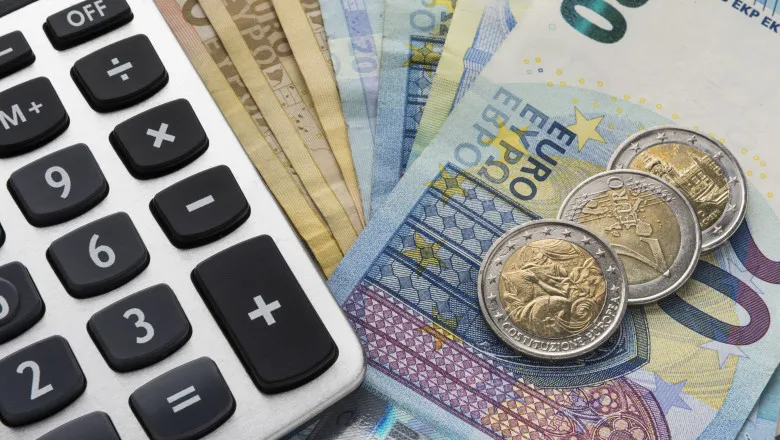
The latest Eurofound report, "Minimum wages in 2026: Annual review", published on Tuesday, shows that Romania was the only one of the 22 EU member states with a national minimum wage that did not increase this amount between January 2025 and January 2026. The gross minimum wage remained at 4,050 RON, but its value in euros fell from 814 to 795 euros due to exchange rate movements. According to Eurofound's charts, the purchasing power of Romania's minimum wage fell by nearly 8%, whilst in all other countries analysed it increased.
The report's primary comparison covers the period January 2025 to January 2026 and does not account for the 7% increase applied in Romania from July 2026 (initially estimated at 8%, but reduced to the final adopted level). The report's authors note that this increase could partially offset the loss of purchasing power, depending on how inflation evolves in the second half of the year.
The decision to keep the minimum wage unchanged at the start of the year came after Romania had recorded the largest increase in the EU between January 2024 and January 2025: 22.7%. According to the report, this increase of nearly 23% would have contributed to the wage freeze in January 2026.
How minimum wages evolved elsewhere in the EU
The average increase in the minimum wage across the 22 EU states operating such a system was 6.7% between January 2025 and January 2026 (median: 5.9%), compared with an average of 7.5% in the preceding year (median: 6.2%).
- Largest increases: Slovenia (16%), Bulgaria (12.6%), Slovakia (12.1%), Lithuania (11.1%), Hungary (11%)
- Significant increases: Cyprus (8.8%), Germany (8.4%), Croatia (8.2%), Czech Republic (7.7%), Estonia (6.8%)
- Moderate increases: Greece (6%), Portugal (5.7%), Latvia (5.4%), Ireland (4.8%), the Netherlands (4.6%), Belgium (4%)
- Small increases: Malta (3.5%), Spain (3.1%), Poland (3%), Luxembourg (2.5%), France (1.2%)
- Romania: 0% (the only country with no nominal increase)
Expressed in euros, Romania's monthly minimum wage of 795 euros was the third lowest in the EU, after Bulgaria (620 euros) and Latvia (780 euros). At the other end of the scale, the minimum wage reached 2,704 euros in Luxembourg, 2,391 euros in Ireland, 2,343 euros in Germany, and 2,295 euros in the Netherlands.
The report clarifies that the 2.4% difference in Romania's minimum wage value in euros (January 2025 vs January 2026) does not represent a reduction in the amount in RON, but merely reflects the conversion of values using the exchange rates at the end of December 2024 and December 2025.
Calculated on an hourly basis, Romania's gross minimum wage was 4.8 euros, the same as in Hungary. Lower levels were recorded only in Bulgaria (3.7 euros/hour) and Latvia (4.5 euros/hour). At the top of the scale: 15.6 euros in Luxembourg, 14.7 euros in the Netherlands, 14.2 euros in Ireland, 13.9 euros in Germany, 13.1 euros in Belgium, and 12 euros in France.
Romania, the only country to see a decline in purchasing power
In real terms, minimum wages increased in 21 of the 22 states analysed. Slovenia recorded the largest gain in purchasing power, at over 13%, followed by Hungary and Lithuania (over 8%), Slovakia and Cyprus (over 7%), and the Czech Republic, Germany, and Bulgaria (approximately 6%). Portugal, Greece, Belgium, the Netherlands, Ireland, and Latvia saw gains of between 2% and 4%, whilst Estonia, Malta, Luxembourg, France, Spain, and Poland recorded smaller but positive increases. Romania was the only country in the "decline" category.
Over the longer term, the picture is different: between 2016 and 2026, Romania's nominal minimum wage more than tripled, and its purchasing power more than doubled. Eurofound ranks Romania first in the EU, with a real increase of approximately 128% over ten years. Romania and Lithuania are the only countries in which the purchasing power of the minimum wage has doubled over this period.
Net minimum wage estimated at 484 euros
For June 2025, the EUROMOD model used by Eurofound estimated a net minimum wage of 484 euros in Romania — the third lowest in the EU, after Bulgaria (427 euros) and Hungary (479 euros). For comparison, the level in Latvia was 623 euros and in Slovakia 664 euros.
The difference between the gross and net wage is explained by taxes and contributions: employee social contributions accounted for 35% of the gross minimum wage, the highest proportion in Eurofound's analysis. Including income tax and deducting any social benefits, the total burden reached nearly 40% — the highest of all countries featured. In Malta, Belgium, and Luxembourg, the total rate was below 5%.
The estimate is based on the model of a single person aged 40, with no children, employed full-time and paid the minimum wage for June 2025 — it does not represent the exact amount received by every employee.
The report also shows that in 2025, the minimum wage represented approximately 46.5% of the average wage (calculated by dividing the minimum wage of 4,050 RON by the average wage of 8,709 RON), slightly below the 47–52% range stipulated by Romania's new minimum wage-setting mechanism.
Who is affected by the July increase
According to the report's annexes, in 2025 there were 831,382 workers paid at the minimum wage, equivalent to 14.5% of total employees. The increase applied from July 2026 was set to affect up to 1,759,027 people, approximately 31% of employees — a figure that includes those whose earnings were influenced by the rise in the minimum threshold, not only those paid at exactly the minimum level.
In February 2025, the Government adopted, through Government Decision 35/2025, a new procedure for the annual setting and updating of the minimum wage, based on projected inflation and labour productivity growth, with a target level of between 47% and 52% of the average wage, established following discussions with social partners. The procedure was not applied in January 2026, with the Government deciding to postpone the update by six months. Additionally, from 1 July, the tax-exempt allowance granted to employees paid at the minimum wage was reduced from 300 to 200 RON, in accordance with Emergency Government Ordinance 89/2025.
The situation in construction
Romania maintained a higher minimum wage for construction employees — 113% of the general minimum wage in January 2026. However, this special level was frozen in 2025 and the sector's tax incentives were abolished. Eurofound estimates that the general minimum wage will reach and subsequently exceed the construction sector level in 2027 or 2028, a situation similar to that in agriculture and the food industry, where the special minimum wage has already been abolished.
The report also highlights a compression of pay scales, with Romania's collective bargaining coverage rate standing at 42.6%.
Content paraphrased and adapted by SeniorHelp from verified public sources.
Original source: Digi24 →Previous article
Pensions frozen for the third year in a row? Public debt puts pressure on the budget
Next article
Pensions and salaries possibly frozen in 2027 as well, due to public debt
Similar news
 Foto ilustrativă
The Senate has voted on the ROBOR credit recalculation law. Romanians could receive money back from banks
14 October 2026

Senate wants recalculation of loans affected by ROBOR, based on IRCC
14 October 2026
Bușoi: The Next Government Must Quickly Decide Whether to Extend the Gas Support Scheme
14 October 2026
Average net salary fell to 5,688 RON in August, below inflation
13 October 2026

Average net salary fell in August 2026, inflation wiped out wage increases
13 October 2026

Annual inflation rose to 6.61% in September, INS announces
13 October 2026