
Epidemiologist: Romania must prepare for mosquito-borne tropical diseases
West Nile is already circulating in Romania, and the tiger mosquito is extending the risk to dengue and chikungunya, warns epidemiologist Emilian Popovici.
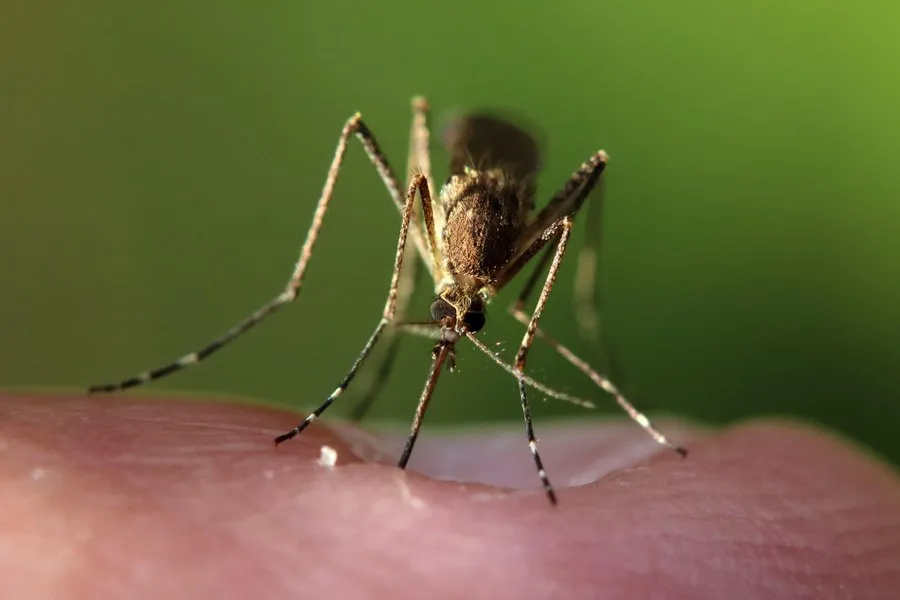
Increasingly long summers and rising temperatures are not only causing discomfort but may also be reshaping the map of mosquito-borne diseases in Romania, warns Prof. Dr Emilian Popovici, a primary care epidemiologist and Vice-President of the Romanian Society of Epidemiology.
According to him, the risk from West Nile virus is currently moderate, with a tendency to rise towards high, whilst the risk of local transmission of tropical diseases remains low for now, but with growth potential. Popovici emphasises that West Nile is no longer a theoretical threat, but "an epidemiological reality we face every summer and autumn". Romania consistently ranks in the top 3 European countries by number of infections, alongside Italy and Greece, with the most affected areas being large cities — particularly Bucharest — and the south-east of the country.
Figures on West Nile and other arboviruses
West Nile virus is transmitted primarily by mosquitoes of the genus Culex (particularly Culex pipiens), through a bird–mosquito cycle. In 2025, Romania recorded 49 autochthonous cases, out of a European total of 1,112 cases and 97 deaths across Europe.
In the 2026 season, up to 26 August, Romania had reported 45 autochthonous cases and 15 affected areas, out of a total of 124 affected areas across 15 European countries. A total of 877 locally acquired human cases were recorded at European level, according to the ECDC.
Beyond West Nile, the risk associated with Dengue fever (transmitted by Aedes aegypti and Aedes albopictus) and Chikungunya (also transmitted by Aedes mosquitoes) is also increasing. Europe reported five autochthonous Dengue cases up to 26 August 2026, all in France. As for Chikungunya, significant outbreaks were recorded in 2025 in France (809 autochthonous cases) and Italy (384 cases), whilst in 2026, France had already reported 33 autochthonous cases by the same date.
According to the ECDC, the tiger mosquito (Aedes albopictus) is already established in Romania, having been identified in 10 of the 42 monitored administrative units.
How climate change influences mosquito expansion
The epidemiologist explains that climate change acts as a "force multiplier" for the northward expansion of Aedes albopictus and Aedes aegypti across Europe. Aedes albopictus is the most adaptable species and is already in an advanced stage of colonising Central and Western Europe, whilst Aedes aegypti, although a more efficient vector for Dengue, has far stricter thermal development requirements.
Higher temperatures shorten the time needed for the virus to replicate within the mosquito and reach the salivary glands, enabling transmission. Heat also accelerates blood digestion in insects, causing them to feed more frequently. Moderate rainfall creates stagnant water pools ideal for egg-laying, whilst heavy flooding can temporarily destroy larvae. Heatwaves lasting more than five days act as a biological accelerator, contributing to the expansion of vector distribution into previously cooler areas, including at higher altitudes.
"It is only a matter of time"
Popovici states that Romania must prepare for diseases historically associated with tropical regions or southern Europe, and that their emergence as public health problems is a realistic scenario, not merely a theoretical hypothesis. His arguments: the transmission vector is already established in the country, climate change is accelerating transmission, and the West Nile precedent already demonstrates an active public health problem.
According to the physician, neighbouring countries such as France, Italy, and Croatia already record annual autochthonous cases of Dengue and Chikungunya generated exclusively by Aedes albopictus. "In Romania, the appearance of the first small local outbreaks is only a matter of time and depends strictly on the number of viraemic travellers entering the country during July and August," says the epidemiologist.
Symptoms requiring medical attention
A mild local reaction following a mosquito bite (itching, redness, small swelling) is normal. However, according to the physician, the following signs warrant attention:
- flu-like symptoms: sudden fever, chills, extreme fatigue, muscle or joint pain;
- neurological signs: severe headache, sensitivity to light, neck stiffness, or confusion;
- gastrointestinal problems: persistent nausea, vomiting, or diarrhoea;
- an extensive local reaction at the site of the bite.
People who have recently visited tropical or subtropical areas, or regions with frequent circulation of malaria, Dengue fever, Zika, Chikungunya, or West Nile, should seek urgent medical attention from a specialist in infectious diseases if any of the following appear within 3–14 days (or even several weeks, in the case of malaria):
- high fever with sudden onset;
- pain behind the eyes, characteristic of Dengue;
- generalised skin rash;
- severe joint pain, characteristic of Chikungunya;
- unexplained gingival or nasal bleeding.
The limitations of current control measures
The epidemiologist considers that current mosquito control measures, based primarily on localised spraying, have limited effectiveness, and that a shift is needed from reactive actions to integrated vector management strategies. Conventional insecticide treatment has only a temporary effect, can generate resistance to repeatedly used chemical substances, has a negative ecological impact, and rain or strong winds rapidly nullify the effect of surface treatments.
An updated approach should include scientific monitoring of mosquito populations, prioritised larval control, spraying concentrated solely in areas with high insect density, and public awareness campaigns promoting the elimination of stagnant water, where the tiger mosquito breeds prolifically.
Content paraphrased and adapted by SeniorHelp from verified public sources.
Original source: Adevărul →Previous article
Brachytherapy: radiation treatment applied directly to skin tumours
Next article
Flu, COVID-19, RSV: what American doctors recommend for the cold season
Similar news
A 30-minute warm bath could lower blood pressure more than moderate exercise
18 October 2026

Artificial intelligence could predict headaches 24 hours in advance
18 October 2026
 Foto ilustrativă
Migraine: how to recognise it and how it differs from an ordinary headache
18 October 2026
Losing a loved one increases the risk of heart attack 21 times in the first 24 hours
17 October 2026

Can protein drinks replace a meal? What a nutritionist says
17 October 2026
What happens in the body during deep sleep: the connection between the brain, muscles and fat
17 October 2026