
CNAS: health card remains valid at the doctor's surgery after 1 September
CNAS announces that access to healthcare services will not depend on the electronic identity card. The national health card can continue to be used, and the new features will be introduced gradually.
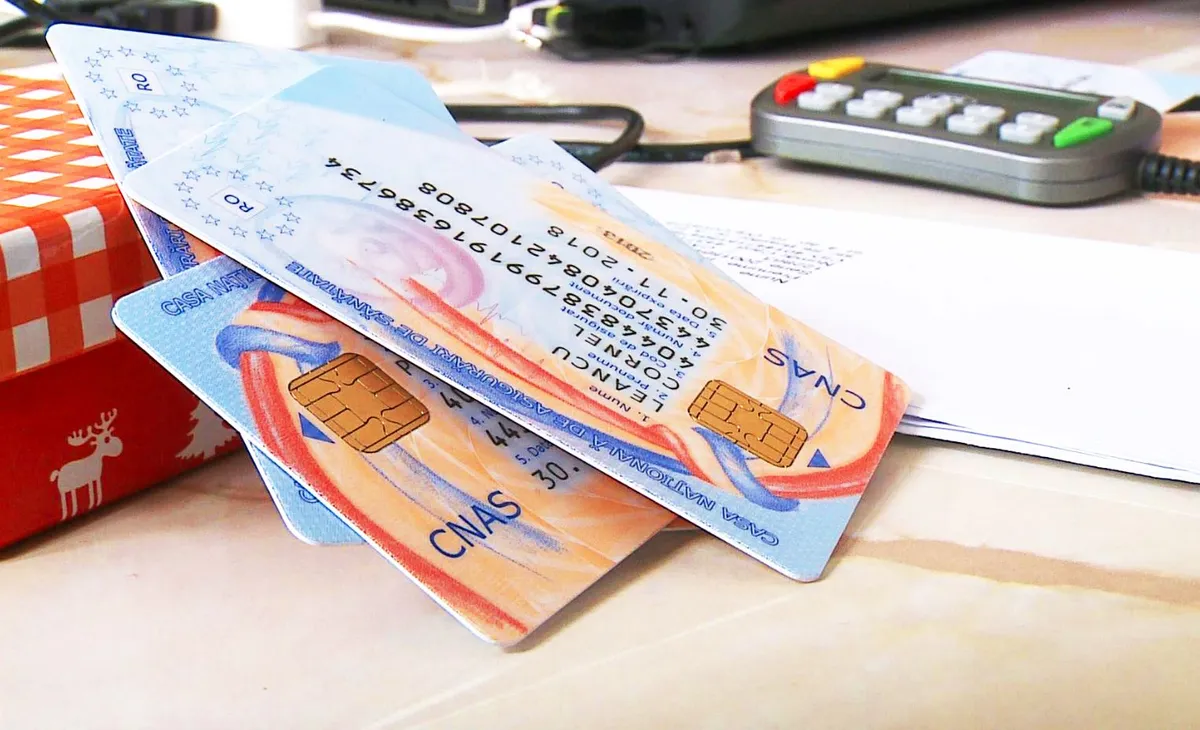
The National Health Insurance House (CNAS) has announced that, from 1 September 2026, patients will not be required to present their electronic identity card (CEI) in order to access medical services. The national health card will remain valid, and new functionalities related to the CEI will be introduced gradually, as healthcare providers update their applications and equipment.
According to the institution, the time available for carrying out the necessary technical changes was too short for the use of the CEI to become mandatory from 1 September itself. For this reason, implementation will be phased, depending on the pace at which GP surgeries, hospitals, pharmacies, and other providers prepare their IT systems for the new components.
CNAS has clarified that the technical interfacing specifications, as well as the SDK components required by developers, have been published on the institution's website, under the "Provider Information" section, the "SIUI" subsection, in the "SIUI Interfacing Specifications" category. Providers working with applications developed by third-party companies have been advised to contact the software manufacturers to arrange updates.
"The National Health Insurance House has made the interfacing specifications and SDK components necessary for carrying out these adaptations available to developers. The national health insurance card will continue to be usable in accordance with the rules currently in force, for as long as is needed to adapt the IT applications. Accordingly, insured persons' access to medical services will not be conditional, from 1 September 2026, on the use of the CEI," CNAS stated in a press release.
The changes also affect the card readers used by providers. Since providers use different models and types of equipment, these will need to be adapted to read both national health cards and electronic identity cards.
Card-based signing suspended throughout September
Although the IT system is operational, the requirement for medical services to be electronically signed using a card will remain suspended throughout September. The measure gives providers additional time to adapt their applications, card readers, and technical infrastructure.
"Given that healthcare providers use various types and models of card readers, it is important that they are given sufficient time to adapt their infrastructure, so that the equipment in use can read both national health cards and electronic identity cards. For this reason, even though the system is operational, CNAS will keep the card-signing requirement suspended throughout September, so that providers have the time needed to implement the new technologies and new features offered by CNAS through its IT platform," the institution's press release states.
CNAS further advised that healthcare providers will be kept informed about the forthcoming technical stages and were encouraged to monitor the updates published in the section dedicated to the Integrated Unified Information System (SIUI).
Content paraphrased and adapted by SeniorHelp from verified public sources.
Original source: Digi24 →Previous article
Basic foodstuffs to become more expensive this autumn: bread, flour, oil, cornmeal, by up to 20%
Next article
PET-CT PSMA: the investigation that precisely locates prostate cancer
Similar news

Niculescu Government promises extended energy bill support and gradual gas liberalisation
15 October 2026

College of Physicians calls for government reforms: on-call duties paid at 2017 salary levels
14 October 2026
 Foto ilustrativă
Patients with chronic illnesses warn they risk running out of treatments. Appeal to authorities
14 October 2026

Chronic patients' desperate plea: "Do not sign the death certificates!"
14 October 2026
 Foto ilustrativă
Crisis hits the state budget: 20,000 social care employees risk going without pay
14 October 2026
CNAS Opens Competition for 16 Director General Positions at Health Insurance Houses
14 October 2026