
Japanese Monk Begins 12 Years of Total Isolation: What Science Says About the Effects of Loneliness
A 31-year-old Buddhist monk has retreated to a temple in Japan for 12 years. Studies show that enforced isolation can severely affect the mind, unlike isolation chosen freely.
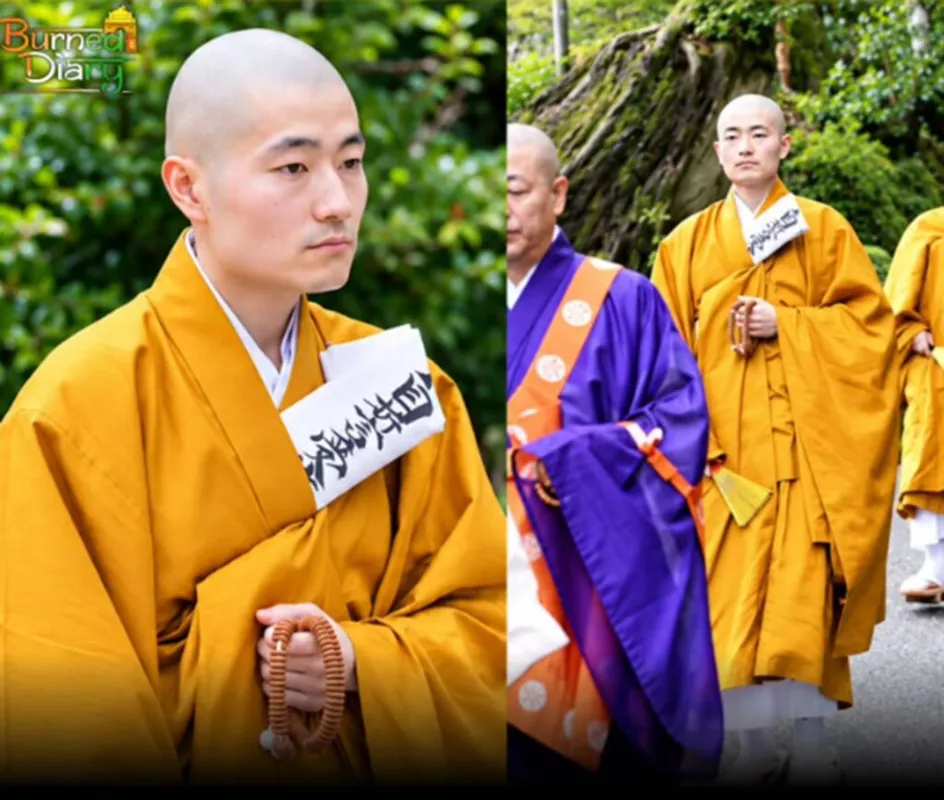
Sogaku Taguchi, a 31-year-old Japanese Buddhist monk, began a 12-year period of complete isolation on 11 September at the Enryaku-ji temple, located on Mount Hiei above the city of Kyoto. According to IFLScience, he is not due to emerge from isolation until 2036.
Throughout this time, his days will be identical: he prepares simple meals for himself and tends to the temple's mausoleum and garden. Taguchi will become the 118th "Jishin" – a kind of "great guardian" – since records of this practice began in 1699.
It is considered one of the most gruelling practices in Buddhism, sometimes referred to as "hell". Winters on the mountain are extremely harsh, and according to tradition, many of those who have attempted to complete this practice have died of illness.
Nevertheless, the monk says he is looking forward to the experience. "This is one of the ascetic practices that Dengyodaishi asked of us, and I am overwhelmed with joy to be standing at the starting line," he told the newspaper The Yomiuri Shimbun.
What happens to the mind in extreme isolation
Prolonged isolation is associated with an increased risk of heart disease, stroke, type 2 diabetes, depression, and anxiety. People who experience severe loneliness tend to die earlier.
In extreme cases, hallucinations and mental confusion can occur. One example is that of American Sarah Shourd, who spent nearly 14 months in isolation in an Iranian prison. "I began to see flashing lights, only to turn my head sharply and find that nothing was there," she wrote in the New York Times in 2011.
The difference between chosen and imposed isolation
A 2017 study conducted by two psychiatrists from University College London examined the experiences of 10 nuns and 10 monks in Spain who were living in isolation.
They did not perceive solitude as a negative experience, but rather as a path towards God. They acknowledged that they suffered, yet found meaning in that suffering.
The study's authors concluded that freely chosen isolation can be bearable – even beneficial – whereas loneliness imposed from the outside generally causes harm.
Content paraphrased and adapted by SeniorHelp from verified public sources.
Original source: Mediafax →Previous article
How to Choose the Right Pillow for Sleep. Signs That It Needs Replacing
Next article
S&P reaffirms Romania's rating at "BBB-". Nazare: "An important result, but insufficient"
Similar news

What a liver operation involves: preparation and recovery
15 October 2026

Cardiac MRI: the investigation that provides detailed images of the heart
15 October 2026

Chronic insomnia linked to higher risk of stroke, dementia and hospitalisation, shows study of 1.3 million people
14 October 2026

He Survived Colon Cancer Three Times. He Hid the First Sign for Years
13 October 2026

DXA Osteodensitometry: how bone density and fracture risk are assessed
13 October 2026

Chronic inflammation can damage the heart before symptoms appear, shows a study of 488,000 people
13 October 2026