
BNR: inflation rises to 6.1% for 2026. Isărescu hopes for a return to target in Q4 2027
BNR has raised its inflation forecast for 2026 to 6.1%, up from 5.5%. Isărescu states that the trajectory remains downward, with a return to the inflation target in the fourth quarter of 2027.
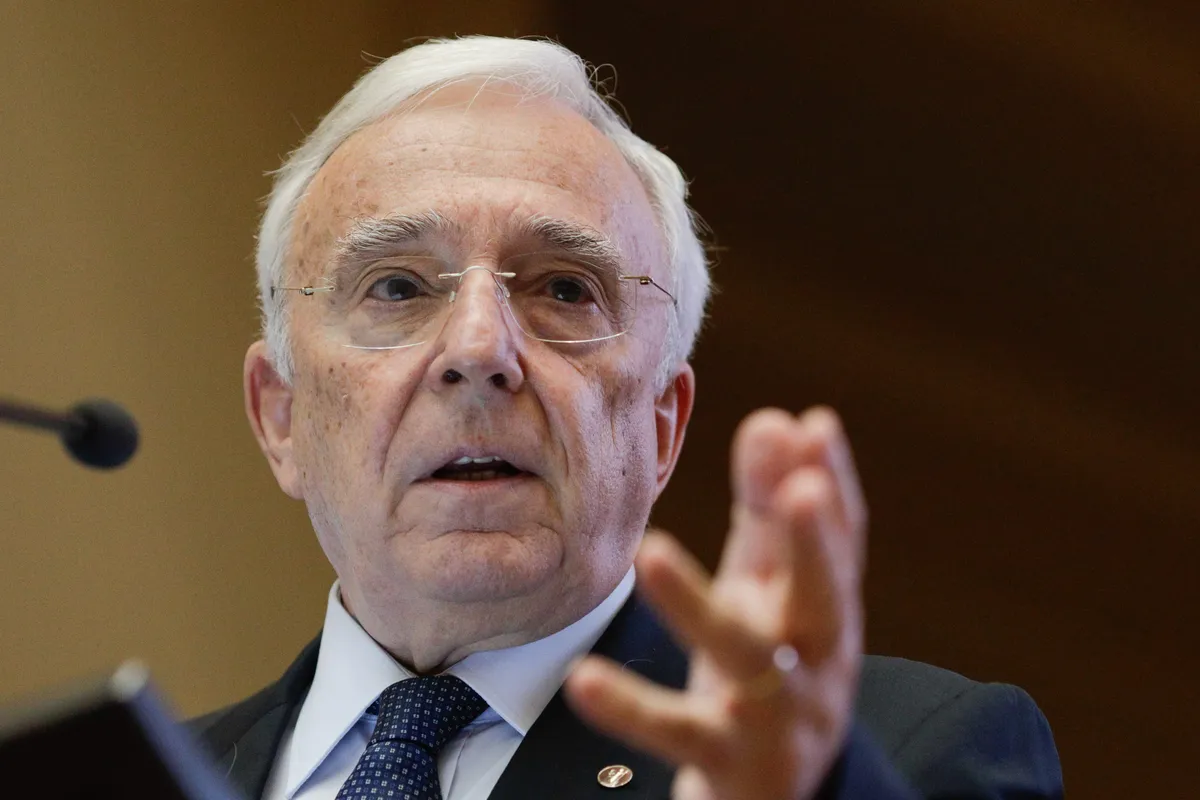
The National Bank of Romania has revised its year-end inflation forecast upwards, raising it from 5.5% to 6.1%. The revision was announced on Thursday by Governor Mugur Isărescu at the presentation of the Inflation Report – August 2026, and reflects the inclusion of the effects of drought, heatwaves, and the energy crisis in the calculations. The forecast for end-2027 has also been raised, from 2.9% to 3.4%.
Isărescu clarified that the NBR incorporates into its baseline scenario only developments considered sufficiently certain, with the remainder treated as risks: "In our forecast, we state from the outset that we work with what is almost certain, if not entirely certain, at present. Everything else we classify as risks. [...] The external environment assumptions are based on the premise of a gradual normalisation of transit through the Strait of Hormuz, without excluding possible episodes of volatility."
Why the forecast has risen
The Governor explained the upward revision: "Our colleagues have introduced, compared to the previous forecast, a slight increase – from 5.5 to 6.1 for December. Why? Because what is now certain has been factored in: the heatwave, the drought, and their impact on electricity production and, more broadly, on the energy situation in Romania." Nevertheless, he insisted that the overall trajectory remains downward: "Even at 0.5 percentage points higher, the trend is still declining, and inflation should continue to enter the variation band around the target in the fourth quarter of 2027."
The NBR maintains its scenario of a significant inflation correction in the third quarter of 2026, as the statistical base effects related to the VAT increase, excise duties, and electricity price rises from the previous year dissipate, followed by a gradual decline towards the inflation target in Q4 2027.
Fuel prices and core inflation
Fuel contributes 1.1 percentage points to the estimated inflation figure for end-2026, with this contribution falling to 0.2 percentage points for 2027. "For this year, we have an additional increase in fuel prices," said Isărescu, noting that the energy component within the 6.1% forecast for 2026 is substantial, but will diminish considerably in 2027.
Adjusted CORE2 inflation is estimated at 5.4% in Q4 2026 (compared to 4.8% in the May report) and at 3.1% at end-2027 (compared to 2.5% in the previous forecast). Factors influencing this trajectory include: telecommunications price increases in July, higher motor third-party liability (MTPL) insurance premiums, leu depreciation, the indirect effects of the energy shock, and the removal, from January 2027, of the cap on trade margins for basic foodstuffs. Acting in the opposite direction are the dissipation of these shocks, fiscal consolidation, moderation of wage cost pressures, and a downward adjustment of inflation expectations.
Risks: geopolitics, energy, extreme weather
The NBR identifies as its main risks: an escalation of geopolitical conflicts, volatility in global financial markets, potential simultaneous disruptions to traffic through the Strait of Hormuz and Bab el-Mandeb, disruptions to oil deliveries, and extreme weather conditions. Isărescu commented: "We cannot venture to say that the Gulf war will end tomorrow, in a month, or in two. [...] As for commodity prices, particularly energy components and foodstuffs, the risks lean more towards the upside." He added, however, that food has so far recorded the smallest price increase among the categories analysed.
No new taxes, but fiscal consolidation continues
The Governor emphasised the importance of completing the NRRP: "We are counting on it – it is essential. [...] The fiscal consolidation process, at least from my perspective, does not require new tax increases, but rather staying the course. There will be social pressures, including on wages, but fiscal consolidation must continue over the medium term."
Isărescu also mentioned the expiry of the consumer protection scheme for natural gas prices, as well as the wage pressures expected particularly in the public sector.
Falling consumption, slower investment
The NBR notes that the aggregate demand deficit is deepening and that short-term economic prospects remain cautious. Private consumption has continued to decline, against a backdrop of reduced purchasing power, more limited access to credit, and low consumer confidence. Investment has continued to grow, albeit more slowly, and the central bank takes the view that expanding productive potential depends critically on accelerating the absorption of European funds. On the labour market, the NBR observes more relaxed conditions, driven by employment adjustments and more modest wage growth.
Key interest rate held at 6.50%
At its meeting on 10 August, the NBR Board of Directors decided to keep the key interest rate unchanged at 6.50% per annum. The rate on the lending facility remained at 7.50%, and the rate on the deposit facility at 5.50%.
Isărescu responded to criticism over the decision not to adjust the rate: "It was not a lack of courage, [...] but was probably – and rightly so – an excess of responsibility. [...] With inflation currently at 8%, it is appreciably above the monetary policy rate. [...] Negative real interest rates are no longer practised anywhere in the world." He explained that the NBR had managed to bring inflation down even under conditions of a negative real interest rate, since price increases had been driven primarily by supply-side factors: "Inflation was predominantly supply-driven; we managed to bring it down with a negative real rate. It was not easy."
Content paraphrased and adapted by SeniorHelp from verified public sources.
Original source: Digi24 →Previous article
Medicover sells Indian hospitals for €1.2 billion, plans to invest more in Romania
Next article
Risk of blackout: how hospitals could be affected if the power goes out
Similar news
 Foto ilustrativă
The Senate has voted on the ROBOR credit recalculation law. Romanians could receive money back from banks
14 October 2026

Senate wants recalculation of loans affected by ROBOR, based on IRCC
14 October 2026

Bușoi: The Next Government Must Quickly Decide Whether to Extend the Gas Support Scheme
14 October 2026
Average net salary fell to 5,688 RON in August, below inflation
13 October 2026

Average net salary fell in August 2026, inflation wiped out wage increases
13 October 2026

Annual inflation rose to 6.61% in September, INS announces
13 October 2026