
Audit at the Ministry of Health: medicine shortages may be detected too late
An audit of the National Medicines Agency reveals that the electronic system does not automatically detect risks of treatment shortages. The Ministry is proposing 16 measures, including automatic alerts.

The Ministry of Health has carried out an audit at the National Agency for Medicines and Medical Devices and within its own structures, to assess how the state monitors medicine stocks and the risks of treatment shortages on the market. The conclusion is that the electronic system currently in use cannot automatically flag stock and consumption issues in real time.
The review covered the entire process by which authorities determine which medicines are available, how much is being consumed, and where shortages may arise: stock reporting, instances of treatment unavailability, medicines sourced for special needs, as well as inspection and control activities.
Monitoring still reliant on manual checks
One of the main issues identified relates to the Electronic Reporting System, which is not sufficiently automated to immediately detect situations such as a stock falling to a critical level, missing reports, or discrepancies between declared and actual quantities.
For this reason, stock monitoring continues to rely heavily on manual checks, complaints, and targeted inspections. The Ministry warns that this approach may result in the risk of a medicine becoming unavailable to patients being identified too late.
The audit also reveals that the Ministry of Health and the Medicines Agency do not have a clearly established, shared working method for using data from the electronic system. There is no unified workflow specifying who verifies the information, how issues are tracked, and who must intervene when a risk arises.
Incomplete data on temporarily unavailable medicines
Information published on temporarily unavailable medicines is not always complete and up to date, which can make it difficult to determine in real time whether a treatment is still available on the market.
Issues were also identified with medicines for special needs: vulnerabilities in the transmission of information on valid authorisations, as well as unclear rules for cases classified under "other necessity situations," which may be interpreted differently.
Delays, including for LOMUSTINE
Auditors found delays at certain stages of the medicines authorisation process, with the case of LOMUSTINE explicitly mentioned. Such delays may affect the timely provision of the quantities required for patients.
Furthermore, the medicines requirements for some national programmes are not always calculated correctly based on patient numbers, actual consumption, and reimbursements, with the risk that the estimated requirement may be understated or based on insufficient data. Documents for medicines intended for special needs are not always issued on time either, as the specialist committees of the Ministry of Health or CNAS do not always transmit the legally required documents and the estimated requirements for the following 12 months in a timely manner.
Limited inspection capacity
The Medicines Agency's inspection capacity is limited relative to the large number of units that must be checked, and unannounced inspections are infrequent. As a result, situations may arise in which a missing report, incorrect information, or discrepancies between declared and physically held stock are not detected quickly enough.
16 recommendations: automatic alerts and stricter controls
Following the audit, 16 recommendations were drawn up for the Ministry of Health and ANMDMR. The primary one concerns developing the electronic system so that stocks and consumption are monitored automatically, without relying solely on manual checks.
The system would send automatic alerts when a stock reaches a critical level, when an operator fails to submit data, when incorrect information is entered, or when any other situation arises that could jeopardise the availability of a medicine. Clearer rules are also called for regarding responsibility for data verification, standardised reporting for temporarily unavailable medicines, the continuous updating of public data, close monitoring of medicines for special needs, and compliance with authorisation deadlines.
The recommendations also include better alignment of medicine requirements with the actual number of patients, consumption figures, and data from national health programmes, strengthening ANMDMR's inspection capacity, and the possibility of an annual plan for unannounced inspections. A review of sanctions for those who fail to report mandatory data or submit false information is also being considered, so that discrepancies between the system and actual stocks can be detected more swiftly.
Statement by Minister Cseke Attila
Interim Health Minister Cseke Attila explained that the audit had been commissioned to quickly identify problems and the solutions needed: "I ordered this audit to rapidly identify the problems in medicines monitoring and the necessary solutions. We must move from reacting to anticipating risks, through a digital system in which stocks and consumption are monitored automatically and any potential issues are flagged in advance. The 16 recommendations focus on digitalising monitoring, increasing transparency, and strengthening controls. The implementation of these measures must be monitored on a regular basis, so that this system becomes more efficient and better equipped to meet patients' needs."
Rules already simplified for medicines sourced in special circumstances
The Ministry of Health had begun simplifying the rules for procurement through the special needs procedure as early as September. The new provisions allow a new authorisation to be prepared earlier, without waiting for the already approved quantity to be almost entirely exhausted: ANMDMR may initiate the procedure when the previously authorised stock falls to 30%, compared to the 10% threshold used previously. The rules also simplify the document process and require continuous stock monitoring, with an obligation to act within no more than three working days of the critical threshold being reached.
Content paraphrased and adapted by SeniorHelp from verified public sources.
Original source: Realitatea →Previous article
Surgeon from Craiova Definitively Convicted for Patient's Death During Surgery
Next article
New COVID XFG variant circulating in Europe: cold-like symptoms
Similar news
 Foto ilustrativă
Crisis hits the state budget: 20,000 social care employees risk going without pay
14 October 2026
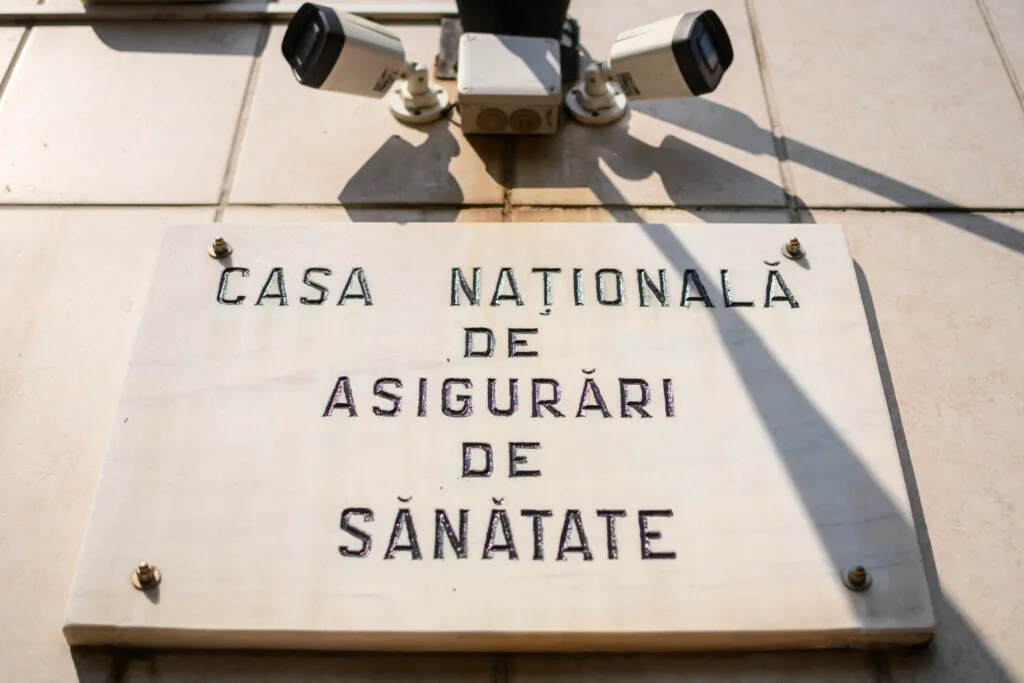
CNAS Opens Competition for 16 Director General Positions at Health Insurance Houses
14 October 2026

Health sector needs 8 billion RON by year's end, Rogobete warns
13 October 2026

Ministry of Health Requests 800 Million RON: Without Funding, Emergency Services and Ambulance Risk Disruption
13 October 2026

The Senate has approved the extension of paid leave for those accompanying cancer patients to medical investigations
13 October 2026

Senate passes law: cancer patients' companions will receive paid leave for medical investigations
13 October 2026