
Cognitive Stimulation for Elderly People with Dementia: Practical Home Exercises
Find out how to maintain your parent's cognitive abilities despite dementia through simple, tailored and effective exercises you can do together at home, without tiring or frustrating them.
Contents
When your mother forgets the names of her grandchildren, or your father asks for the third time in an hour whether he's taken his tablets, you feel helpless. Mild or moderate dementia transforms someone you love into a familiar stranger, and you desperately search for ways to slow this process. The good news is that cognitive stimulation – a structured set of activities designed to maintain and improve mental function – can make a real difference to their quality of life and the rate at which the condition progresses.
Unlike conventional memory exercises for healthy adults, cognitive stimulation for people with dementia does not aim to restore lost functions to pre-illness levels. The goal is more realistic and more gentle: to preserve remaining abilities for as long as possible, to stimulate existing neural connections, and – crucially – to create moments of joy and emotional connection between you. It is not about tests or performance, but about pleasant engagement in meaningful activities.
This guide offers concrete, practical tools you can begin using today to provide cognitive stimulation at home, tailored to the stage of the condition and your loved one's personality. You will learn how to establish a sustainable routine, how to recognise signs of success or fatigue, and when to seek specialist support.
Contents
- What cognitive stimulation is and why it matters
- Types of activities recommended for different stages
- How often and how long: building a sustainable routine
- How to adapt activities to the stage of dementia
- Signs that an activity is working or needs to change
- Free resources and support in România
- When to consult a specialist
- Frequently asked questions
What cognitive stimulation is and why it matters
Cognitive stimulation is an evidence-based, non-pharmacological intervention that uses structured activities to maintain and improve mental functioning in people with mild to moderate dementia. Unlike traditional memory training for healthy individuals – which focuses on improving performance through intensive repetition – cognitive stimulation takes a holistic, gentle approach that is adapted to existing limitations.
Key differences include a slower pace, a focus on enjoyment rather than performance, and the simultaneous engagement of multiple cognitive domains (memory, language, attention, and orientation in time and space). Rather than asking an older person to memorise lists of words or numbers, we invite them to take part in conversations about the past, to recognise familiar objects, or to sort photographs – activities that stimulate the brain without generating anxiety or a sense of failure.
Scientifically demonstrated benefits
Research shows that regular cognitive stimulation can slow cognitive decline, improve mood, and increase the sense of competence in a person with dementia. Moreover, these sessions create moments of emotional connection between carer and older person, reducing social isolation – one of the most harmful factors in the progression of dementia.
- Maintaining independence in daily activities for longer
- Reduction of depressive symptoms and agitation
- Improved quality of life for both the older person and the family
- Delaying the need for residential care
- Providing a sense of purpose and usefulness
Types of activities recommended for different stages
Not all activities are suitable for every person or every stage of dementia. The key is to choose exercises that are stimulating enough to engage the brain, but not so difficult that they cause frustration. Below are the main categories of activities, with practical examples you can start using today.
Word games and verbal activities
These stimulate semantic memory and language ability. For mild dementia, you might try simple riddles, completing proverbs, or naming items within categories (fruits, occupations, cities). For moderate dementia, simplify: ask them to name objects around the house, describe familiar pictures, or recall the words to songs they knew in their youth.
- Completing popular proverbs and sayings
- Guided conversations about personal history (old photographs, childhood memories)
- Reading short texts aloud, followed by a simple discussion
- Listening to music from their youth and singing together
Puzzles and visual-spatial activities
These exercises train the ability to recognise shapes, colours, and spatial relationships. Choose puzzles with large pieces and clear, familiar images (landscapes, animals, family photographs). For more advanced stages, even simply sorting cards by colour or matching pairs of socks can be stimulating.
- Puzzles with 12–50 pieces, depending on the stage
- Matching games (identical pictures, colours, shapes)
- Arranging objects by size or colour
- Drawing or colouring in adult colouring books
Sorting objects and practical activities
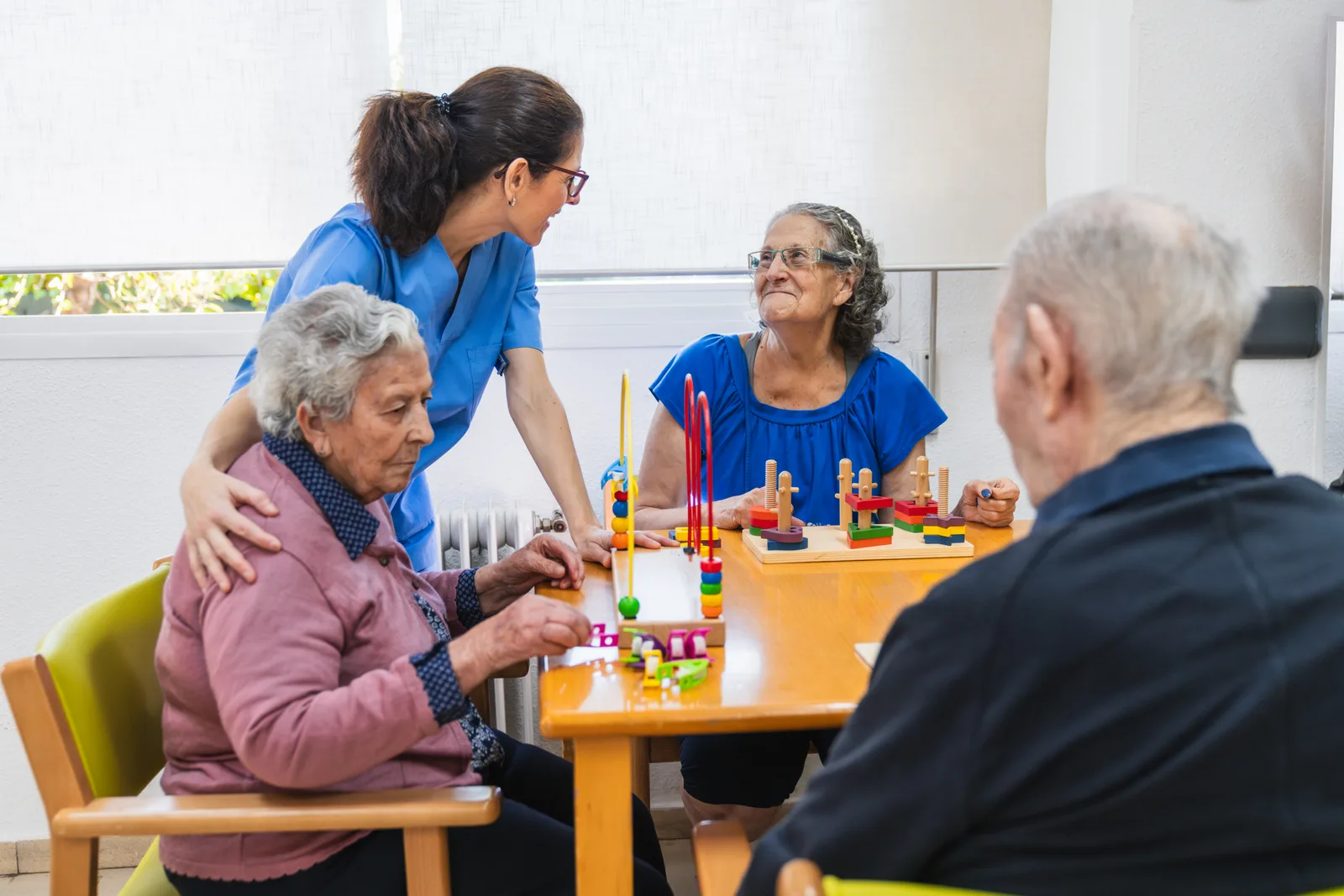
Activities involving the handling of physical objects provide both tactile and cognitive stimulation. These can include sorting buttons by colour, folding towels, matching socks, or preparing simple ingredients for cooking. What matters is that the person feels they are contributing to household tasks, not performing exercises.
Craft and creative activities
Craft activities stimulate fine motor skills and creativity, whilst also providing the satisfaction of a tangible result. Adapt the complexity accordingly: for some, this might mean working with modelling clay; for others, it may simply be winding yarn or exploring different textures.
- Simple gardening (touching soil, watering plants)
- Light kitchen tasks (stirring, washing vegetables)
- Simple crafts (threading beads onto thick wire, working with paper)
- Folding laundry or setting the table
How often and how long: building a sustainable routine
Consistency matters more than intensity. It is far better to do 15–20 minutes every day than to have one exhausting two-hour session once a week. Routine gives the person with dementia a predictable and reassuring framework, reducing anxiety and making participation easier.
Most specialists recommend short sessions of 20–30 minutes, four to six times a week for mild dementia, and 10–15 minutes daily for moderate stages. Choose the same time each day – preferably in the morning, when most older people are more alert and less fatigued. Avoid late afternoon, when accumulated tiredness can intensify confusion and irritability.
Creating a suitable environment
Eliminate distractions: turn off the television, reduce background noise, and make sure you have enough uninterrupted time. Good natural light and a comfortable temperature make a real difference. Prepare all the materials you need before the session begins, so you do not waste time searching for things or break the flow of the activity.
- The same place and the same time for every session
- A quiet, well-lit space, free from distractions
- Regular breaks if the session lasts longer than 15 minutes
- Always ending on a positive note, even if you need to simplify the activity
How to adapt activities to the stage of dementia
Flexibility is essential. What worked last month may be too difficult today – and conversely, people with dementia sometimes have good days when they can manage more. Pay close attention to non-verbal cues: facial expressions, body language, and level of engagement.
For mild dementia, you can use more complex activities that involve multiple steps: puzzles of 30–50 pieces, simple cooking recipes, or simplified discussions about current events. People at this stage can often still read, write, and follow two- or three-step instructions.
Adaptations for moderate dementia
As the condition progresses, simplify: reduce the number of options (three instead of ten), use visual and verbal cues, and combine instructions with practical demonstrations. Break complex tasks into very small steps and offer frequent praise for every achievement, however small.
- Reduce session length to 10–15 minutes
- Use materials that are very familiar and personally meaningful
- Accept approximate answers or creative alternatives
- Focus on the enjoyment of the process, not on getting the right answer
- Be prepared to abandon an activity if it causes frustration
Signs that an activity is too difficult
If your loved one becomes agitated, refuses to participate, averts their gaze, or begins repeating themselves obsessively, the activity is likely too challenging. Switch immediately to something simpler or more familiar. Do not insist – forcing participation creates negative associations and will make future engagement more difficult.
Signs that an activity is working or needs to change
How do you know whether your efforts are paying off? The success of cognitive stimulation is not measured by the recovery of lost abilities, but by the maintenance of existing ones, by improved mood, and by the quality of the interaction between you. Here are the indicators to watch for.
Positive signs to look out for
- Your loved one looks forward to the sessions and participates willingly
- They smile, laugh, or show signs of satisfaction during the activity
- They remain focused for at least a few minutes (even if at first it was only seconds)
- They initiate conversations or gestures related to the activity
- They seem more alert and communicative after sessions
- Episodes of agitation or anxiety decrease in frequency
When to change your approach
If, after two to three weeks of consistent effort, you notice persistent resistance, crying, verbal aggression, or complete withdrawal, it is time to change your strategy. Perhaps the type of activity does not resonate with their personal history and preferences – someone who never enjoyed puzzles is unlikely to take to them now. Perhaps the time of day is wrong, or the sessions are too long.
Do not give up entirely – try something different. Test a range of activities until you find what works. Sometimes the simplest gesture – simply holding your parent's hand whilst listening to music together – provides more positive stimulation than any formal exercise.
When to seek specialist help
If your loved one shows rapid decline (significant changes over a matter of weeks), new aggressive behaviours, hallucinations, or severe confusion, it is time to consult a neurologist or geriatrician. Equally, if you feel overwhelmed, exhausted, or unsure how to proceed, a psychologist who specialises in dementia or an occupational therapist can offer personalised guidance and emotional support for the whole family.
Free resources and support in România
You are not alone in this journey. România offers a range of free or affordable resources for families caring for someone with dementia, although availability varies between urban and rural areas. Knowing about and making use of these services can make the difference between total burnout and sustainable, manageable care.
Day centres for people with dementia
Many larger cities have day centres where older people with mild to moderate dementia can spend a few hours a week in a supervised environment, taking part in cognitive stimulation activities organised by professionals. These services give the carer some respite whilst providing beneficial socialisation for the older person. Contact the Direcția Generală de Asistență Socială și Protecția Copilului (DGASPC) in your county for information about available programmes.
- DGASPC – information about local social services and day centres
- Medical care homes – some offer free cognitive stimulation programmes
- NGOs such as Asociația Alzheimer România – support groups and educational materials
- University hospitals with geriatric wards – specialist consultations and assessments
Support groups for carers
Caring for someone with dementia is emotionally exhausting. Support groups – whether in person or online – give you space to express your frustrations, learn from others' experiences, and realise that you are not alone. Many hospitals and NGOs hold free monthly meetings. Search on Facebook for groups dedicated to carers of people with Alzheimer's disease or dementia – the Romanian online community is surprisingly active and supportive.
Free and reduced-cost consultations
Through the public health system, you can access free consultations with a GP and referrals to neurologists or geriatricians. Although waiting times can be long, these services include standardised cognitive assessments and treatment recommendations. Some university hospitals run research programmes that offer free assessments in exchange for participation in clinical trials – an option worth exploring if you want access to specialist expertise.
When to consult a specialist
Cognitive stimulation at home is a valuable tool, but it does not replace professional medical assessment and monitoring. Consult a neurologist or geriatrician specialising in dementia in the following situations:
- Rapid or unexpected cognitive decline (significant changes over a matter of weeks)
- The appearance of new symptoms: hallucinations, delirium, marked aggression
- Severe swallowing difficulties, frequent falls, or unexplained weight loss
- Concerns that current medication is no longer effective or is causing side effects
- Before making major decisions (residential care, significant changes to the care arrangement)
- For periodic reviews (every 6–12 months) to monitor the progression of the condition
Do not delay seeking medical advice in the hope that things will improve on their own. Dementia is a progressive condition, and early interventions – both medical and non-medical – can slow its progression and significantly improve quality of life. A specialist can adjust medication, identify aggravating factors (infections, dehydration, adverse reactions), and guide you towards specialist resources in your community.
Frequently asked questions
How long does it take to see results from cognitive stimulation?
Results vary from person to person. Some improvements in mood and engagement may appear after just a few sessions, but deeper cognitive effects are usually observed after six to eight weeks of consistent practice. Patience and consistency are essential.
What should I do if my parent flatly refuses to take part?
Never force participation. Try to identify the reason: perhaps the activity is too difficult, too childish, or simply does not suit their personality. Try other types of stimulation – sometimes a simple walk in the park or listening to favourite music offers more value than any formal exercise.
Could I cause harm by choosing activities that are too difficult?
You will not cause neurological damage, but you may generate frustration, anxiety, and future resistance. If you notice signs of distress, stop immediately and simplify. The aim is for this to be a pleasant experience, not an assessment of competence. Always prioritise your loved one's emotional comfort.
Can cognitive stimulation stop the progression of dementia?
Unfortunately, no – it cannot halt the disease, but it can slow cognitive decline and improve quality of life. Think of it as physiotherapy for the mind: it does not cure the underlying condition, but it maintains existing function for as long as possible and provides comfort.
Is cognitive stimulation enough, or is medication also needed?
Cognitive stimulation works best in combination with medication prescribed by a neurologist. They are complementary, not alternative approaches. Always consult a doctor to establish the best care plan, which will typically include medication, non-pharmacological interventions, and lifestyle adjustments.
How much do the materials for home cognitive stimulation cost?
Most activities can be carried out using free household items: old photographs, buttons, magazines, playing cards, kitchen utensils. Modest investments might include simple puzzles (15–30 RON) or colouring books (10–20 RON). You do not need expensive materials – your creativity and your time are the most valuable resources of all.
Home cognitive stimulation is not a miracle solution, but it is a profound act of love and a genuinely effective tool for improving the quality of life for a parent or grandparent with dementia. Every 15-minute session in which you connect emotionally, share a laugh, or simply spend time together without pressure is a victory. If you feel you need more support, or the situation is becoming overwhelming, do not hesitate to speak to a specialist or contact a local day centre – you do not have to go through this alone.
This article is intended for informational purposes only and does not replace medical advice. For specific situations, please consult a specialist in neurology or geriatrics.
Previous
5 Practical Tips for Managing Incontinence in the Elderly
Next
How to Manage Enteral Nutrition for an Elderly Person at Home: A Practical Guide
Similar articles

Întrebări frecvente despre verificarea referințelor unui îngrijitor
21 November 2026

How to Manage Sleep in an Elderly Person with Chronic Pain: Causes and Solutions
20 November 2026

Aspiration Pneumonia in the Elderly: Signs That Family Members Should Recognise
19 November 2026
Atrial Fibrillation in the Elderly: Signs That Family Members Must Recognise
18 November 2026
Frailty Syndrome in the Elderly: How to Recognise It at Home
17 November 2026

Malnutrition in the Elderly: Signs That Families Need to Recognise
16 November 2026