Bedbugs Discovered at "Bagdasar-Arseni" Hospital: Rehabilitation Ward Temporarily Closed
The Neuromuscular Recovery Ward of the "Bagdasar-Arseni" hospital in Bucharest will be closed until 14 September for pest control treatment. The 31 admitted patients have been evacuated.
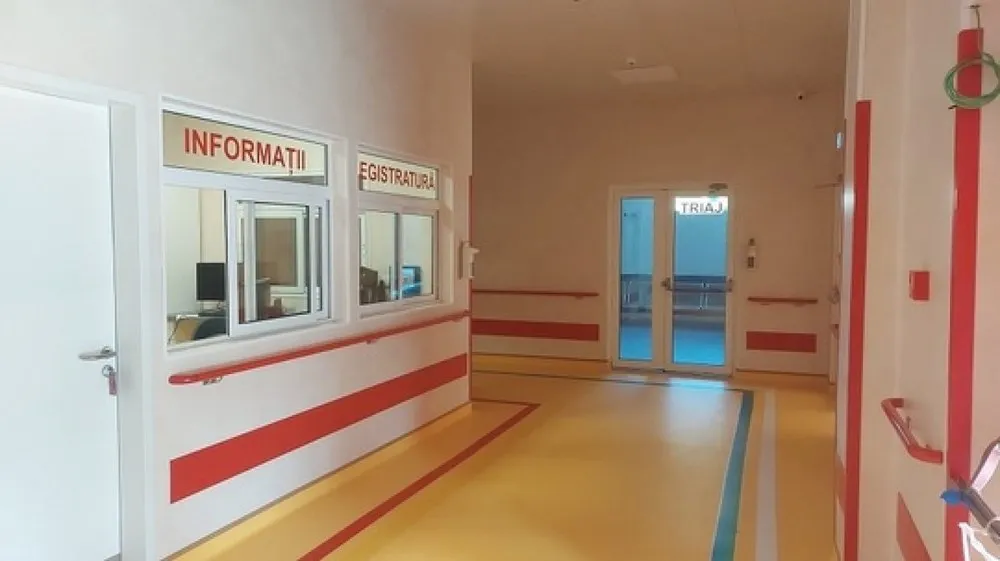
The Neuromuscular Recovery Clinical Ward of the "Bagdasar-Arseni" Clinical Emergency Hospital in Bucharest has been closed from 17 August to 14 September, after bedbugs (Cimex lectularius) were discovered in several areas of the ward. The measure was taken by hospital management to allow pest control operations and to prevent the insects from spreading to other wards.
The ward has a capacity of 64 beds, but at the time the infestation was discovered, 31 patients were admitted, some of them bedridden. They were discharged, transferred, or redirected to day hospitalisation and outpatient services, depending on each patient's medical condition.
Hospital management issued the following statement: "From 17.08 to 14.09, the Neuromuscular Recovery Clinical Ward of the Bagdasar-Arseni Clinical Emergency Hospital will be closed for specialist pest control operations to eliminate Cimex lectularius (the bedbug). This measure is necessary as several specimens were found in multiple locations within the ward, both to ensure the safety of patients and staff, and to prevent infestation spreading to other hospital wards. Services will continue on an outpatient basis and, where necessary and possible, through day hospitalisation."
How the bedbugs may have entered the hospital
The exact source of the infestation has not been identified. Florin Bica, the hospital's spokesperson, stated: "We don't know the exact source, but the number of bedbugs in the capital is on the rise. Visitors bring them in." According to him, the insects can enter the hospital with patients or their visitors, via personal items, clothing, or bags brought from outside — particularly as some patients prefer their own clothes to the pyjamas provided by the hospital.
Veterinary doctor Anca Tomșa explained that the presence of bedbugs is not necessarily linked to the cleanliness of a space: "Unfortunately, people bring them in through many different routes, and very easily. In practice, any one of us can pick up this parasite and bring it home or into another space… You can pick them up in a hotel, on a plane, on a park bench, or on a bus. You can sit on a bench where an infested person has been sitting, the parasite has dropped from their clothing or bag, and you pick it up without realising."
How bedbugs spread
Once inside a space, bedbugs can hide in mattress seams, furniture, or cracks in floorboards. If they penetrate the interior of a mattress or pillow, the item in question must be replaced, according to Dr Tomșa: "If bedbugs have got inside a mattress or pillow, there is essentially no form of disinfection that can be carried out. Those items must be replaced."
The insects can move through cracks and pass from one room to another, making it difficult to contain an infestation in a large building with many shared spaces. They are most active at night, between 1:00 and 5:00, and to detect them, mattress seams, the area under bedside tables, bed legs, furniture, and cracks in floorboards must all be checked.
Health risks
Bedbugs feed on blood, and their bites can cause red, swollen, intensely itchy lesions. Scratching can damage the skin and lead to infections such as impetigo or cellulitis. Reactions are more pronounced in children and elderly people, and bedridden patients require additional attention to prevent secondary infection of lesions. Bites typically appear in clusters or in a line, most commonly on the hands, shoulders, and neck, and may be mistaken for other insect bites.
Multiple pest control treatments are required
According to Dr Anca Tomșa, a single treatment is not sufficient if the infestation has spread: "One treatment is not enough if the infestation has had time to extend. We recommend repeating the treatment every 3, 5, or 10 days, depending on the severity and the insect's development cycle." Solutions used include permethrin-based products, diatomaceous earth powder (applied to cracks and seams), and insecticide fumigants for enclosed spaces.
The doctor also recounted that some people face repeated infestations and regularly purchase concentrated solutions: "There are people who are constantly fighting them — people whose limited financial means are apparent — and so, every two or three days or so, they come in and buy a concentrated solution, dilute it with water, and apply it in their homes, in the areas where they notice the most parasitic insects. There are people who often come in with them wrapped in a tissue for us to identify. Yes, we identify them, we confirm that these are indeed bedbugs."
Bedbug sightings have also been reported in Bucharest's metro system, with Metrorex employees warning that passengers can unknowingly carry them home, as well as at a secondary school in the capital before the end of the school year, where parents complained that pest control had not been carried out properly.
Content paraphrased and adapted by SeniorHelp from verified public sources.
Original source: Adevărul →