
Pîslaru: Two more weeks of negotiations with trade unions on the pay law
The interim Minister of Labour says the draft salary law cannot be submitted to Parliament at this time, due to tensions in the Health and Education sectors. Discussions could last until mid-August.
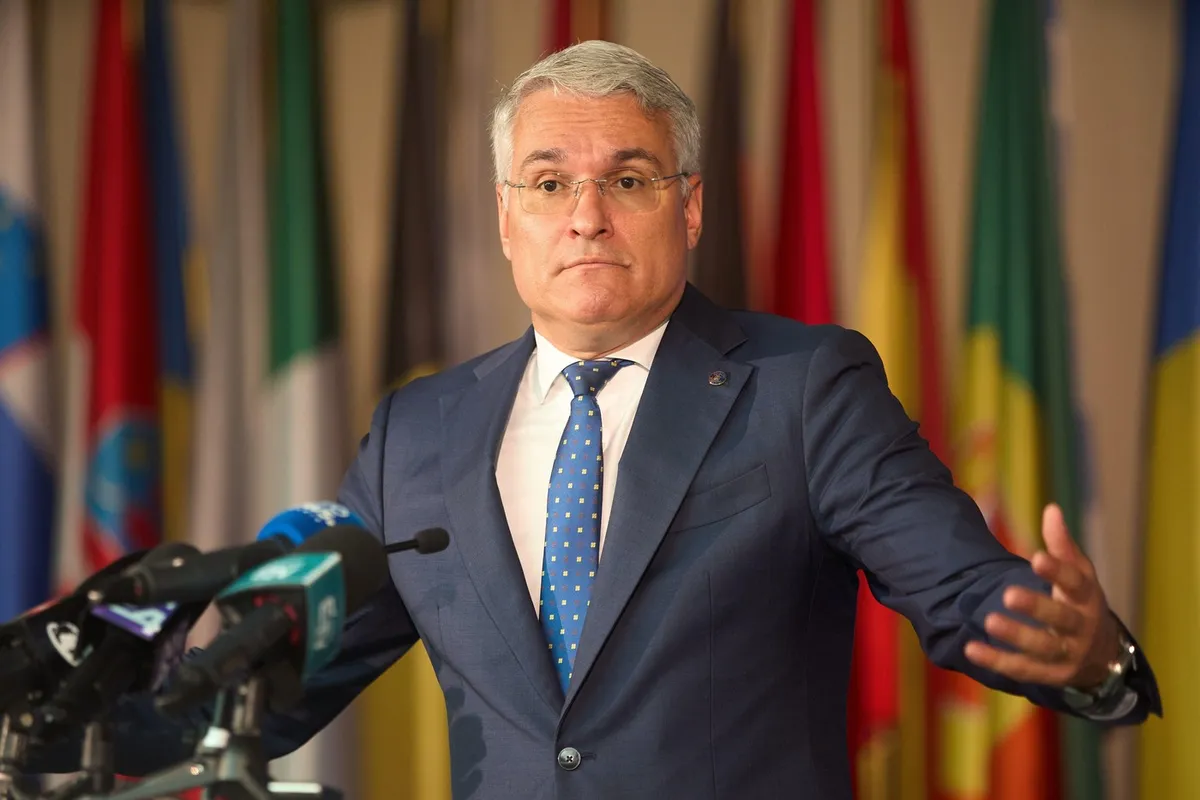
The interim Minister of Labour, Dragoș Pîslaru, has announced that the new pay legislation is not yet ready to be sent to Parliament, as no consensus has been reached with trade unions in the Health and Education sectors. According to the official, negotiations will continue for approximately two more weeks, with a final version of the draft potentially being completed by mid-August.
"There are two sectors, health and education, where social tensions — partly due to this major disinformation campaign, and partly due to the objective problems these systems face — mean that, at this moment, there is no consensus that the draft could pass through Parliament," Pîslaru explained.
The Minister stated that the Government will continue discussions with trade unions before seeking parliamentary support for the draft: "We intend to spend another two weeks on this matter, so that, by mid-August, if we have achieved significant improvements — including an improvement in dialogue with the trade unions — we can arrive at a version we are able to support."
"No current income will be reduced"
Pîslaru dismissed accusations that the new legislation would lead to pay cuts for public sector employees. He explained that the draft includes a mechanism to protect current income levels: "Through the mechanism for protecting income currently in payment, no one's income in the health sector or the broader public sector can be reduced. There is a major disinformation campaign attempting to suggest that vulnerabilities exist. They do not."
The Minister also stated that approximately one third of employees will receive compensatory payments, provided for directly within the legislation and subject to the same tax treatment as salary: "If the salary calculated under the new pay scale would result in a net payment lower than what you currently receive, the law automatically guarantees your current salary. These compensatory amounts form part of the body of the legislation."
"Two thirds of health sector employees will receive higher salaries"
According to Pîslaru, the majority of healthcare staff will benefit from pay rises under the new legislation: "For two thirds of the health sector, salary income will increase through the basic salary component, with allowances reaching up to 50%. On the continuity side, this will be the first time that on-call shifts and rotas are paid as a percentage of salary."
The Minister added that an additional budget of 2,700,000,000 RON has been allocated to the healthcare system.
Content paraphrased and adapted by SeniorHelp from verified public sources.
Original source: Digi24 →Previous article
Free medical tests for uninsured people in 2026: what CNAS covers and what conditions must be met
Next article
Rogobete accuses unfairness in the distribution of hospital posts: Bihor received more than other counties
Similar news
 Foto ilustrativă
The Senate wants to eliminate the CASS insured person certificate by 2027
14 September 2026

Paid sick leave: how many months of contributions are required and when it is not required at all
14 September 2026
 Foto ilustrativă
Romanians' Pensions Among the Lowest in the EU. Bulgaria Has Overtaken Us
12 September 2026
 Foto ilustrativă
Average pension rises to 2,942 RON, but the number of pensioners continues to fall
11 September 2026

Vela Group Study: average pension reached 2,942 RON in Q2 2026, but purchasing power is declining
11 September 2026
Pension system under increasing pressure: contributions cover only 73% of expenditure
10 September 2026