
Spider silk, studied for wound treatment and controlled drug delivery
American researchers are studying spider silk as a biodegradable material for drug delivery, burn treatment, and tissue regeneration.
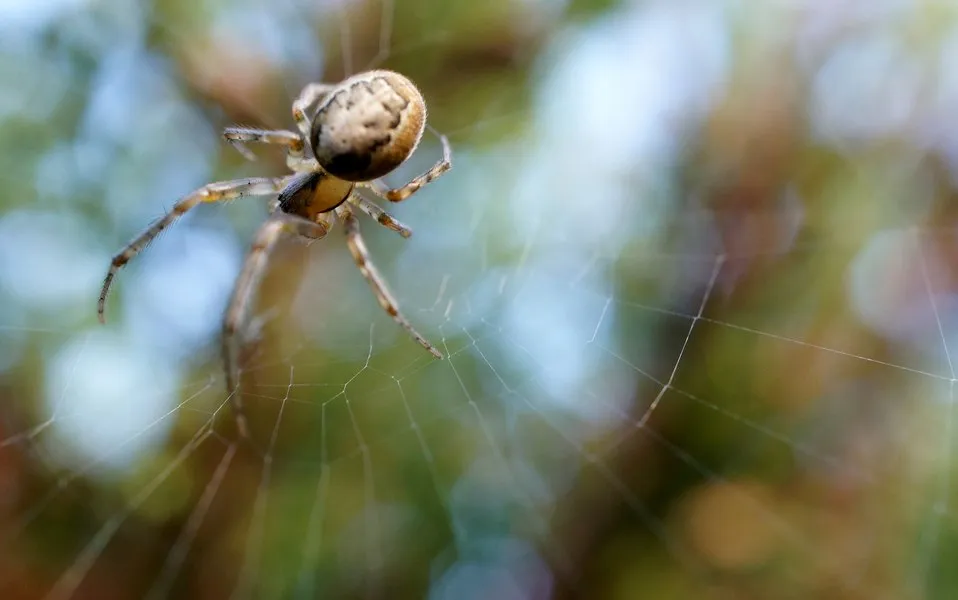
Spider silk, known for its strength, elasticity, and ability to decompose naturally, is being studied by scientists for potential medical applications, ranging from controlled drug release to wound treatment and tissue regeneration.
Research inspired in part by Spider-Man
Aliasger K. Salem, a professor of pharmaceutical sciences at the University of Iowa, outlined these potential applications in an article published by The Conversation. He used the evolution of the Spider-Man character as a reference point to illustrate the difference between fiction and biological reality: in earlier films, Peter Parker produced his web artificially using mechanical devices mounted on his wrists, whereas in Spider-Man: Brand New Day, scheduled for release on 31 July 2026, the character generates it directly from his body.
According to Professor Salem, this change "transforms a familiar superhero technology into a biological ability and highlights the remarkable properties of spider silk." He noted, however, that unlike the fictional character, humans cannot produce or project spider silk from their own bodies. The real material has been studied for decades precisely for its strength, elasticity, and potential to be adapted for medical and technological purposes.
How the silk used in the laboratory is obtained
Researchers do not harvest silk directly from spiders. Instead, the genes responsible for producing it are introduced into bacteria or other cell types, which manufacture modified silk proteins. These can subsequently be transformed into particles, films, gels, fibres, or porous structures with potential medical applications.
"As a researcher in drug delivery and tissue engineering, I see an essential lesson in spider silk: a material's performance depends not only on its components, but also on how scientists process and organise them," explained Aliasger K. Salem.
Gradual drug release and support for tissue regeneration
In drug delivery, silk can act as a biodegradable reservoir that retains the active substance and releases it gradually into the body. In a laboratory study, particles derived from modified spider silk released small molecules at a nearly constant rate for approximately two weeks. Researchers have also examined the use of particles and gels made from this silk for protein-based medicines, such as insulin and antibody treatments.
"These systems are still experimental, but they demonstrate how a biodegradable material could protect a drug and control its release. Silk can also form a temporary three-dimensional structure that gives cells the space they need to attach, grow, and organise themselves during tissue repair," the professor explained.
Depending on the type of injury, such a structure can be used to cover a skin wound or implanted to bridge or fill an area of damaged tissue. Animal studies have tested recombinant spider silk for covering burns, whilst laboratory research has examined structures designed to support cell growth and nerve regeneration. Professor Salem's team has applied similar principles to create synthetic 3D-printed structures for bone regeneration, which provide physical support to tissues and deliver genetic instructions that stimulate blood vessel formation and tissue repair.
The complex structure of spider webs
According to Professor Salem, a spider's web is not a uniform thread, but a complex structure composed of several types of silk, each with a distinct role: some threads form the frame and "spokes" of the web, others make up the elastic, sticky spiral that traps prey, whilst others are used for anchoring, protecting eggs, building shelters, or as safety lines.
"Spider silk is the material spiders produce to build webs. The web is the architecture made from that material, just as steel is a material and a bridge is a structure. All spiders produce silk, although many of them do not build webs to capture food," explained Aliasger K. Salem.
Silk is composed primarily of proteins called spidroins, whose chains combine rigid sections with flexible portions, giving it both strength and the ability to absorb energy when stretched. A remarkable example is the silk produced by Darwin's bark spider, which, relative to its volume, can absorb more than ten times as much energy before breaking as Kevlar.
Spiders do not store ready-formed threads in their bodies, but rather proteins concentrated in a water-based liquid stored in abdominal glands. As the liquid passes through a narrow channel, water is expelled, and changes in pH, ion concentration, and mechanical forces align the proteins and transform them into a solid fibre. The process takes place at ambient temperature, without the intense heat or harsh solvents commonly used in the manufacture of synthetic fibres.
Content paraphrased and adapted by SeniorHelp from verified public sources.
Original source: Adevărul →Previous article
Pensioners increasingly affected by rising prices: money barely covers bills and medication
Next article
Morning 30-minute walk: the simple habit that helps you live longer
Similar news
 Foto ilustrativă
Herniated Disc: Causes, Symptoms and Treatment Options, Including Surgical
21 September 2026
 Foto ilustrativă
Physical activity during oncological treatment, supported by doctors
21 September 2026
Cambridge Study: Reading for Pleasure Benefits Mental Health and Reduces the Risk of Dementia
20 September 2026

Autumn plums: fibre, easy digestion and the recommended daily portion
20 September 2026
 Foto ilustrativă
What Foods Help Control Blood Sugar and Cholesterol, as Explained by an Endocrinologist
19 September 2026
 Foto ilustrativă
West Nile Virus: 95 cases in Romania in 2026, the majority amongst people aged 60–69
18 September 2026