
ICU Doctor at Floreasca Hospital: The Pay Law Would Worsen the Staffing Crisis in Intensive Care and Emergency Units
Radu Țincu, head of the ICU at Floreasca Hospital, warns that the pay legislation would deepen the medical staff shortage and push nurses towards the private sector.
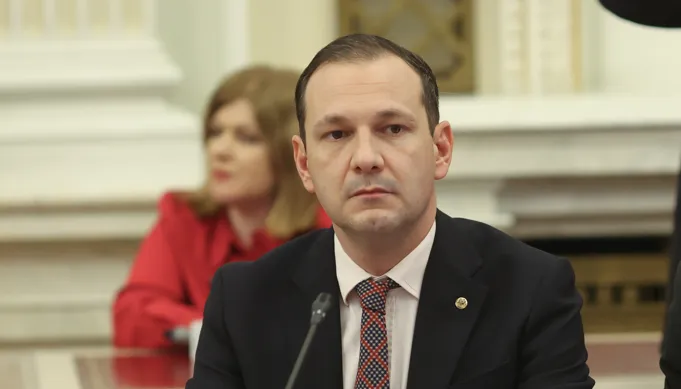
Radu Țincu, head of the Intensive Care Unit at Floreasca Hospital, warned in a statement to Digi24 that the Romanian healthcare system is facing a genuine staffing crisis, and that implementing the pay legislation in its current form could further worsen the situation in intensive care units and emergency departments.
The doctor said he had spoken with nurses who were concerned that their salaries might fall. Fearing this, many of them are considering moving to the private sector, where they would earn similar amounts to their current pay but with less demanding working conditions.
Țincu also warned of the risk posed by reducing allowances: "If we cut allowances today, we will set ourselves back 15 years." He explained that these allowances had been introduced specifically to attract medical staff to county hospitals, which at the time had many unfilled posts.
Regarding the pay legislation, the doctor stressed: "It comes on top of an already existing shortfall in medical staff, and this will lead to a worsening of the staffing deficit in intensive care units and emergency departments."
The staffing deficit is more serious than the posts frozen by the Government
According to Radu Țincu, the staffing crisis is not limited to budgeted posts that have been frozen by a government memorandum and could not be advertised for competition. He pointed out that there is also a staffing requirement set out in ministerial orders — one from 2009 and one updated in 2025 — specifying how many doctors and nurses are needed for an intensive care unit to function properly.
"I must tell you, not a single unit in Romania complies with these orders today, because hospitals have not updated their staffing requirements in line with them," the doctor stated.
He provided a concrete example: although the regulations stipulate one nurse for every two intensive care patients, in practice, even in large hospitals with adequate staffing, the ratio reaches one nurse to four or five patients. This represents a deficit of at least half the required number of nurses.
The situation is even more severe for other categories of staff, such as healthcare assistants and auxiliary personnel. Radu Țincu noted that some hospitals have no porters and others have no infectious disease specialist, despite the ministerial order requiring one to be present. "We have a far more serious deficit than those posts the Government is now trying to unfreeze," the doctor concluded.
Radu Țincu also highlighted significant disparities in workload between doctors, giving the example of a surgeon who operates on one patient a month compared to one who performs 30 operations in the same period.
Content paraphrased and adapted by SeniorHelp from verified public sources.
Original source: Digi24 →Previous article
Dr. Radu Țincu: shortage of medical staff directly affects hospital patients
Next article
Government unlocks 6,850 positions in hospitals and at the Ambulance Service
Similar news
 Foto ilustrativă
Romanians' Pensions Among the Lowest in the EU. Bulgaria Has Overtaken Us
12 September 2026
 Foto ilustrativă
Average pension rises to 2,942 RON, but the number of pensioners continues to fall
11 September 2026

Vela Group Study: average pension reached 2,942 RON in Q2 2026, but purchasing power is declining
11 September 2026

Pension system under increasing pressure: contributions cover only 73% of expenditure
10 September 2026
 Foto ilustrativă
ROBOR Compensation Law Delayed by Two Weeks in the Senate
10 September 2026
Who Can Combine a Pension with a Salary in 2026: Rules and Income Limits
10 September 2026