
Cancer patients most affected by hospital strike, yet stand in solidarity with doctors
The postponement of oncological investigations is the most serious effect of the healthcare strike, says the president of the National Association for Patient Protection. Patients and doctors are calling on the authorities for a coherent reform.
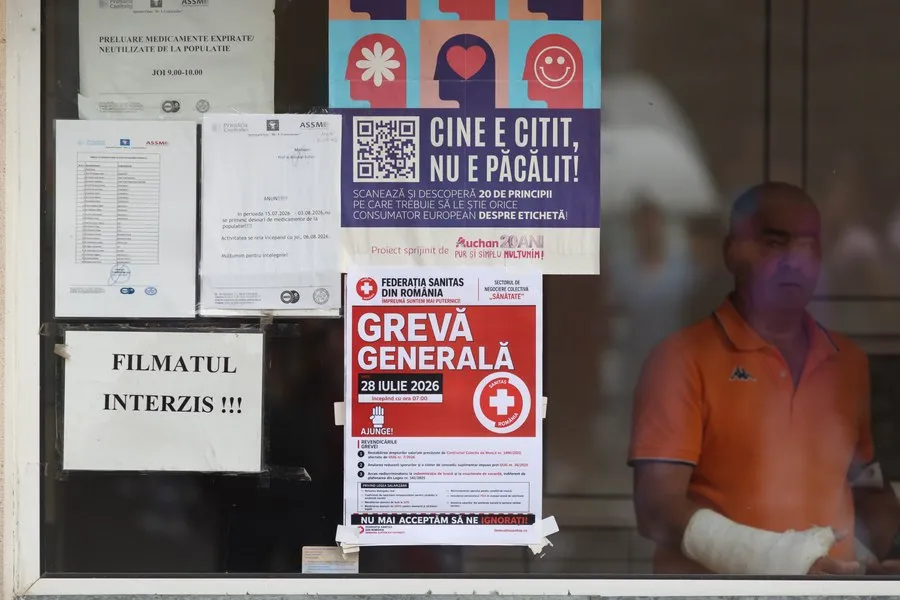
The general strike in the healthcare system has caused the greatest difficulties for patients with appointments for oncological investigations, warns Vasile Barbu, president of the National Association for Patient Protection. According to him, the postponement of these procedures not only delays diagnosis, but also places considerable psychological strain on patients.
"The strike has created serious problems, particularly for patients who had appointments for oncological investigations which, whilst not emergencies, required an early approach in order to establish or confirm a diagnosis. As a result of the strike, these procedures could no longer be carried out, and patients left in limbo — fearful that they may have cancer — are subjected to significant psychological pressure and suffering. Furthermore, the delay is all the more serious given that no one can tell them how long this situation will last or when they will be rescheduled," said Vasile Barbu.
Patients understand doctors, but are unhappy with the authorities
Barbu notes that, despite the difficulties caused by the strike, the majority of patients are showing understanding towards medical staff, with their frustrations directed at the authorities and the political class.
"We have observed that, in general, patients understand the doctors, and there have been very few confrontations or reproaches — these arose only in the case of individuals who were uninformed or influenced by certain so-called media outlets that practise manipulation rather than journalism. Indeed, in the vast majority of cases, patients' frustration is directed not at medical staff, but at the authorities and, in particular, at politicians. Whilst doctors have also raised concerns about some patients who behaved aggressively, these are isolated incidents. In most cases, people simply ask what will happen and when they will be rescheduled, and some even contact us to find a hospital that can help them. We are therefore encountering situations that range from very serious to less critical," Barbu added.
He advises people to be patient, expressing confidence that the authorities will not allow the situation to continue indefinitely, whilst acknowledging that there are already individuals seriously affected by the deadlock.
Confirmation from doctors
Ștefan Bușnatu, a consultant cardiologist at the "Bagdasar-Arseni" Clinical Emergency Hospital and Associate Dean at the "Carol Davila" University of Medicine and Pharmacy in București, confirms patients' solidarity. "I have met numerous patients who understood our message and showed empathy. Many of them told us that they witness the pressure under which medical staff work on a daily basis, and that they understand the problems we are highlighting affect not only healthcare workers, but also the quality of medical services they themselves receive," he said.
Bușnatu explains that, in the first few days, the strike was conducted responsibly, with emergencies and cases that could not be deferred managed in accordance with professional obligations. "The strike is not directed against patients, nor against the practice of medicine. On the contrary, it is a warning signal regarding the difficulties facing the healthcare system," the doctor clarified.
What doctors are asking of the authorities
With regard to the draft Pay Act, Bușnatu says the greatest concern relates to the lack of predictability and the possible reduction in income for certain professional categories carrying significant responsibility. "The pay system must be fair, transparent and predictable, one that rewards competence, performance and professional responsibility," he stated, adding that any pay reform should be embedded within a broader strategy for retaining and attracting medical professionals to the public sector.
The doctor warns of the risk of a fresh exodus of healthcare professionals in the absence of coherent public policies, and highlights the need for an integrated plan covering human resources, investment, digitalisation, prevention and equitable patient access to care. "The motivation is not purely financial. What drives us to continue this course of action is the lack of a clear vision for how the healthcare system will develop," concluded Ștefan Bușnatu.
Content paraphrased and adapted by SeniorHelp from verified public sources.
Original source: Adevărul →Previous article
Bolojan, ahead of the Fitch decision: political instability creates a worrying outlook
Next article
Strike in Healthcare: unions warn of pay cuts, Government insists otherwise
Similar news
 Foto ilustrativă
West Nile Virus: 95 cases in Romania in 2026, the majority amongst people aged 60–69
18 September 2026
 Foto ilustrativă
Cluster headache: intense one-sided head pain
18 September 2026
 Foto ilustrativă
Deep Vein Thrombosis: What Minimally Invasive Clot Aspiration Treatment Involves
17 September 2026
 Foto ilustrativă
Why gastroesophageal reflux worsens at night when lying down
17 September 2026
Hernia Surgery: Faster Recovery Through Minimally Invasive Methods, More Common in Private Clinics Than in Public Hospitals
16 September 2026
 Foto ilustrativă
Canned tuna and mercury: what a nutritionist says about the risks and serving sizes
16 September 2026