
Third Day of Healthcare Strike: Interventions and Admissions Postponed, Unions Demand Written Guarantees
Hospital employees continue their strike, demanding written guarantees that their earnings will not fall under the new Pay Act. Hundreds of operations and consultations have been rescheduled.
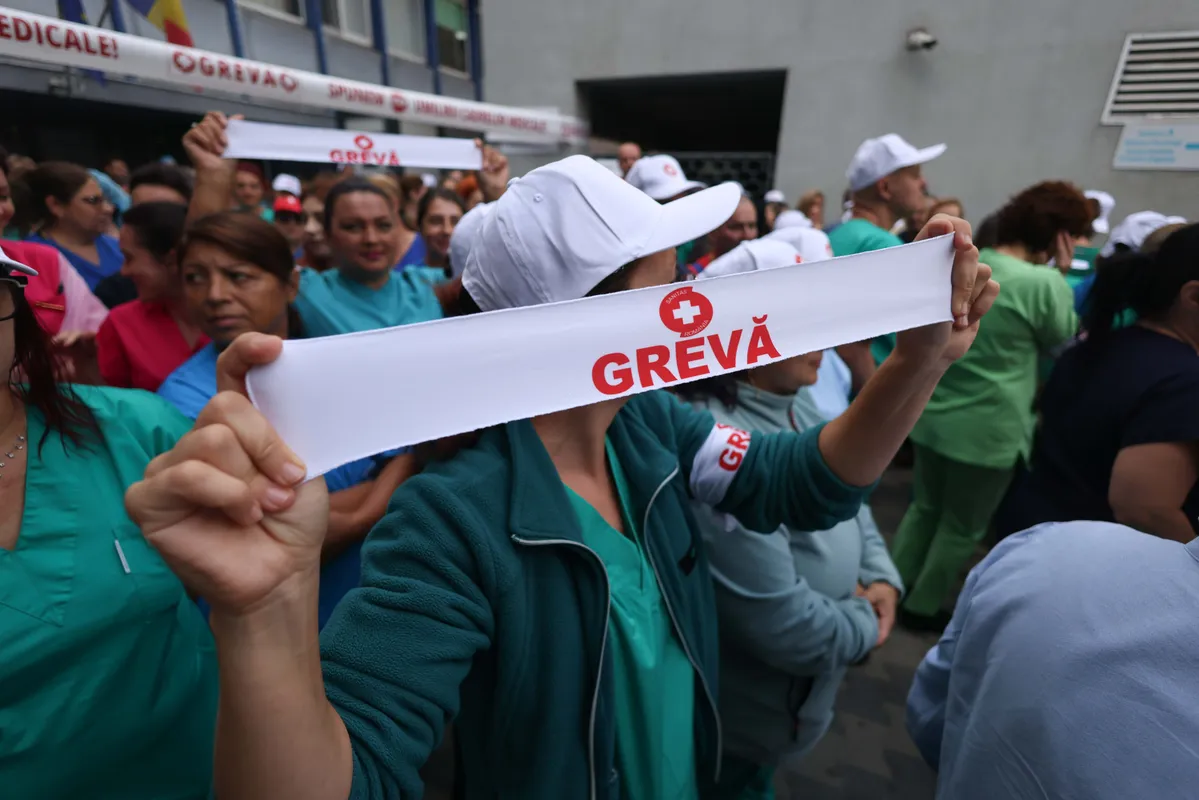
The healthcare strike has entered its third day, with union members warning that the current protest — unprecedented in the past decade — is merely a first step. They are threatening large-scale street demonstrations if the Government fails to provide additional guarantees regarding the new Pay Act, even though the legislation already stipulates that salaries within the sector will not be reduced. Government representatives, for their part, maintain that the strike is politically manipulated and reaffirm that no earnings will be cut.
In the meantime, public hospitals are operating at minimal capacity: medical staff are attending only to emergency cases, whilst scheduled operations and planned admissions are being postponed.
Healthcare workers say they do not trust the Government's promises and are demanding written guarantees that their earnings will not be reduced. Hundreds of surgical procedures and consultations have been rescheduled. At protests held outside hospitals, chants such as "Respect and dignity for healthcare!" and "We want justice for healthcare!" rang out, with calls also made for a general strike to be declared.
Patricia Tănase, a general nurse at the "Bagdasar-Arseni" Clinical Emergency Hospital, stated: "The strike will continue until we have some real promises, written down on paper."
Medical staff argue that, although the Government says salaries will not fall, the reduction of allowances will nonetheless affect employees' monthly earnings. Radu Țincu, head of the Intensive Care Unit at the "Floreasca" Clinical Emergency Hospital, explained: "Earnings and salaries should not be confused. A portion of the earnings in intensive care and emergency units comes from the difficult working conditions allowance. If that allowance is reduced, the base salary does not technically decrease, but people's overall earnings will."
The discontent is further fuelled by a sense that the efforts made during times of crisis have been forgotten: "When there were serious incidents — Colectiv, the COVID pandemic — we were there, doing our duty. Back then we were heroes; now we're being made to look ridiculous," said one healthcare professional.
Otinel Șandru, the SANITAS leader at the Arad County Clinical Emergency Hospital, announced that the protests will continue and that a large-scale rally in Bucharest is being planned: "We are preparing for a major rally in Bucharest. [...] More than 10 surgical procedures have been postponed, and on average several hundred appointments have been rescheduled."
Currently, medical facilities are providing emergency care only, and patients with scheduled consultations, tests, or non-urgent procedures must wait until normal services resume. Union members are warning that, without firm commitments from the authorities, the protests could escalate into a general strike.
Prime Minister Ilie Bolojan stated on Digi24 that the healthcare strike is founded on "disinformation and lies", offering his own explanation of the provisions within the Pay Act. He accused Alexandru Rogobete, the former PSD Health Minister, of failing to act on the matter during his time leading the ministry, asserting that "throughout all these days he has behaved irresponsibly, being one of the arsonists of this healthcare strike".
Content paraphrased and adapted by SeniorHelp from verified public sources.
Original source: Digi24 →Previous article
A persistent cough lasting more than three weeks: doctors warn of lung cancer risk
Next article
Strike in hospitals enters third day: union members demand real negotiations, not just 6,800 positions
Similar news
 Foto ilustrativă
CNAS Apologises After the eSănătateaMea Platform Displayed the Term "Handicapped"
10 September 2026
 Foto ilustrativă
Elderly people in Romania's deserted villages, between hunger and hardship: "I can go to bed without eating"
9 September 2026
Six days of delays at Floreasca: patient with fractures operated on privately for 8,000 euros
8 September 2026
The Government has approved 2.1 million RON for 479 families in emergency situations
3 September 2026
 Foto ilustrativă
The Government grants emergency aid of over 2.18 million RON to families in need
3 September 2026
"My e-Health" hits snags at launch: CNAS says the platform is working
1 September 2026