
Myths and truths about recreational activities for the elderly
Discover what's real and what's myth about activities for seniors. Essential information for families who want to ensure an active and joyful old age for their loved ones.
Contents
When it comes to caring for our parents or grandparents, we all want to give them the best possible quality of life. Yet numerous misconceptions persist about recreational activities for older adults, and these can seriously limit the benefits that seniors could otherwise enjoy. Some people believe that at a certain age there is no longer any need for socialisation or varied activities, whilst others assume that any form of recreation is sufficient, regardless of individual circumstances.
The reality is far more nuanced and, above all, far more optimistic than we might imagine. Recreational activities are not mere pastimes – they represent a fundamental component of physical and mental health in later life. In this article we shall explore the most common myths and uncover the truths validated by specialists, so that families can make informed decisions for the benefit of their loved ones.
Whether you are caring for a parent at home or evaluating options such as day centres or specialist care homes, a proper understanding of the role of recreational activities will help you provide superior quality care and observe real improvements in your senior's wellbeing.
Contents
- The myth that older adults no longer need socialisation
- The myth that any activity will do
- The myth that seniors prefer to sit quietly
- Scientific truths about the benefits of recreation
- Types of activities with genuine impact
- The importance of personalising programmes
- How to recognise when activities are working
- When to consult a specialist
The myth that older adults no longer need socialisation
One of the most harmful myths is that as people age, they lose either the desire or the need to socialise. Many families believe that a parent or grandparent sitting at home in front of the television is perfectly content, and that this is a perfectly normal situation for their age. In reality, social isolation in older adults is recognised by the World Health Organisation as being just as harmful as smoking.
Recent studies from 2026 show that seniors who regularly take part in group activities have an approximately 40% lower risk of developing dementia compared with those who are socially isolated. Human interaction is not a luxury – it is a biological necessity that persists throughout one's entire life. Even introverted individuals need quality social connections, tailored to their temperament.
Signs of social isolation to watch for
- Diminishing interest in activities that were previously enjoyed
- Changes in appetite or neglect of personal hygiene
- Increased irritability or episodes of sadness
- Apparently accelerated cognitive decline
- Sleep problems or a reversal of the sleep-wake cycle
These signs must not be ignored. Therapeutic, structured, and varied socialisation can reverse many of these symptoms and dramatically improve quality of life.
The myth that any activity will do
Another common myth is that simply offering activities – any activities – is sufficient. Many facilities organise generic events, applying the same formula to all residents without any personalisation. The reality is that every senior has a unique history, distinct preferences, and individual needs that must be taken into account.
A retired engineer may find no satisfaction in the same activities that enthuse a former music teacher. Furthermore, physical and cognitive condition varies enormously from person to person. An activity that is too simple may be perceived as patronising and demotivating, whilst one that is too complex can generate frustration and anxiety.
Criteria for suitable activities
- They should respect the person's current cognitive level
- They should connect with past interests and passions
- They should offer an appropriate degree of challenge without being overwhelming
- They should allow for gradual progress and learning
- They should include both social and individual components
At AsertivO - Servicii Premium Pentru Seniori in Otopeni, the multidisciplinary team assesses each resident individually to create a personalised programme of recreational and therapeutic activities. This individualised approach makes all the difference between simply filling time and genuinely improving quality of life.
The myth that seniors prefer to sit quietly
Many carers and families mistakenly interpret a senior's passivity as personal preference, when in fact it may be the result of depression, unmanaged chronic pain, or a lack of opportunities. It is true that energy levels decline with age, but the need for meaning, purpose, and engagement remains.
Research in psychogerontology demonstrates that seniors who have structured and meaningful activities report higher levels of happiness and satisfaction than those with free but unoccupied time. The issue is not a lack of desire to be active – it is finding the right activities, adapted to one's current capabilities.
Real barriers that can be mistaken for a lack of interest
- Uncontrolled physical pain that limits mobility
- Hearing or vision problems that have not been adequately addressed
- Undiagnosed or insufficiently treated depression
- Anxiety related to performance or fear of failure
- Lack of transport or accessibility
Once these barriers are identified and properly managed, most seniors rediscover the pleasure of being active and connected. The role of family members and professionals is to create the context and support necessary for this re-engagement.
Scientific truths about the benefits of recreation
Beyond the myths, there exists a substantial body of research confirming the profound impact of recreational activities on the health of older adults. These are not mere distractions, but therapeutic interventions with measurable effects on physical, cognitive, and emotional health.
Studies in neuroplasticity show that the brain retains the capacity to form new neural connections even at advanced ages, when appropriately stimulated. Activities that combine cognitive, physical, and social components are the most effective at maintaining brain health and slowing cognitive decline.
Scientifically documented benefits
- Reduced risk of dementia by 30–50% in people with regular cognitive activity
- Improved balance and muscle strength through adapted physical activities, reducing the risk of falls
- Reduction of depressive symptoms through socialisation and enjoyable activities
- Improved sleep quality through healthy fatigue and structured routine
- Maintained functional autonomy for longer periods of time
- Increased perceived quality of life and overall satisfaction
These benefits are not automatic – they depend on the quality, variety, and consistency of activity programmes. A well-structured programme can radically transform the trajectory of ageing for older adults.
Types of activities with genuine impact
Not all activities are created equal. The most effective programmes combine multiple types of stimulation, simultaneously addressing different aspects of health and wellbeing. Here are the main categories that should feature in a balanced programme for older adults.
Cognitive activities
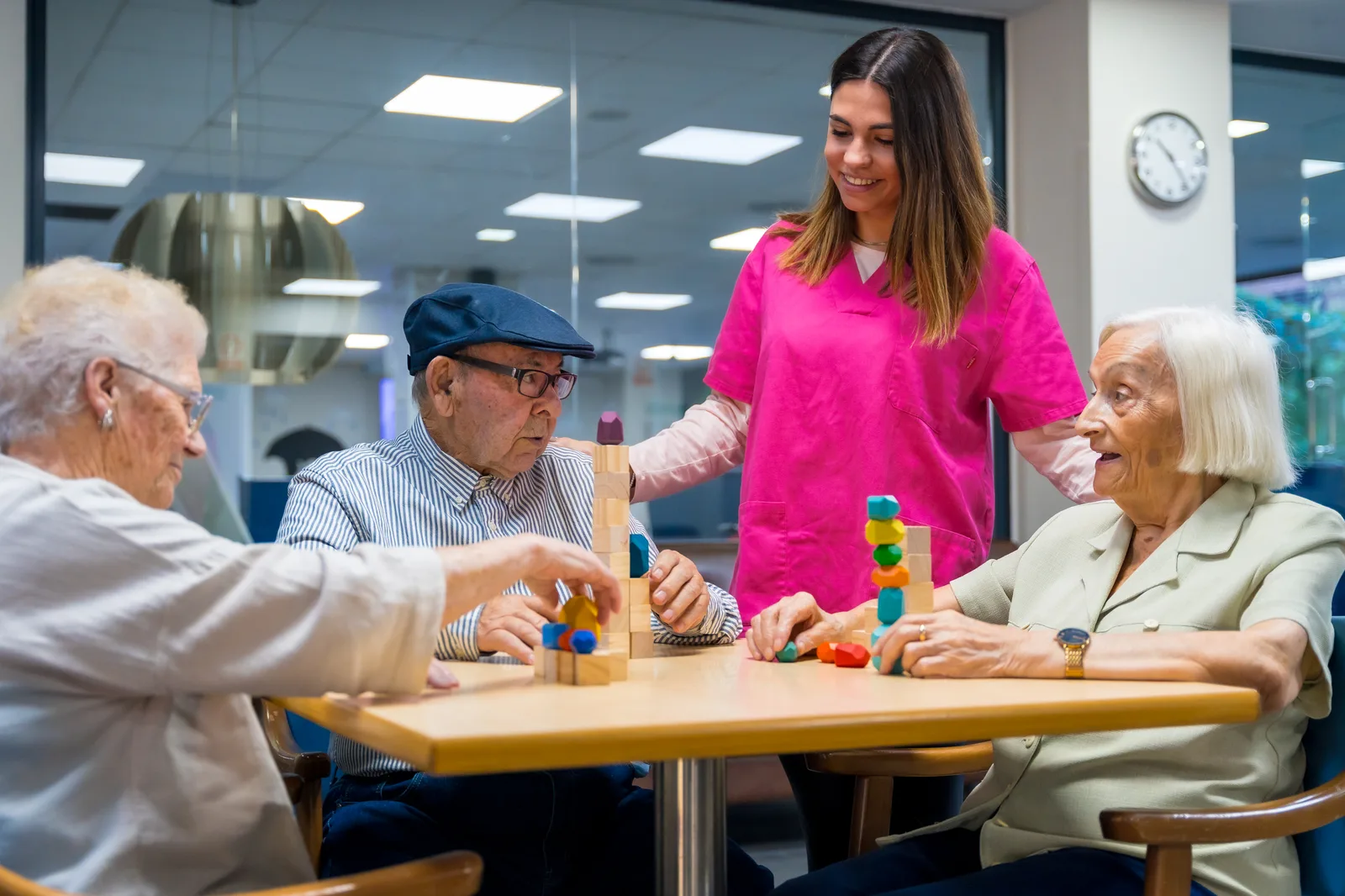
These stimulate mental functions and help maintain cognitive agility. Effective examples include adapted memory games, discussions on topics of interest, reading and discussing books in a group, word games and puzzles at an appropriate level, and even learning new things adapted to current capacity.
It is important that these are neither too simple (so as not to bore) nor too complex (so as not to frustrate). The optimal challenge lies within the zone of proximal development – slightly more difficult than current comfort, but achievable with effort.
Adapted physical activities
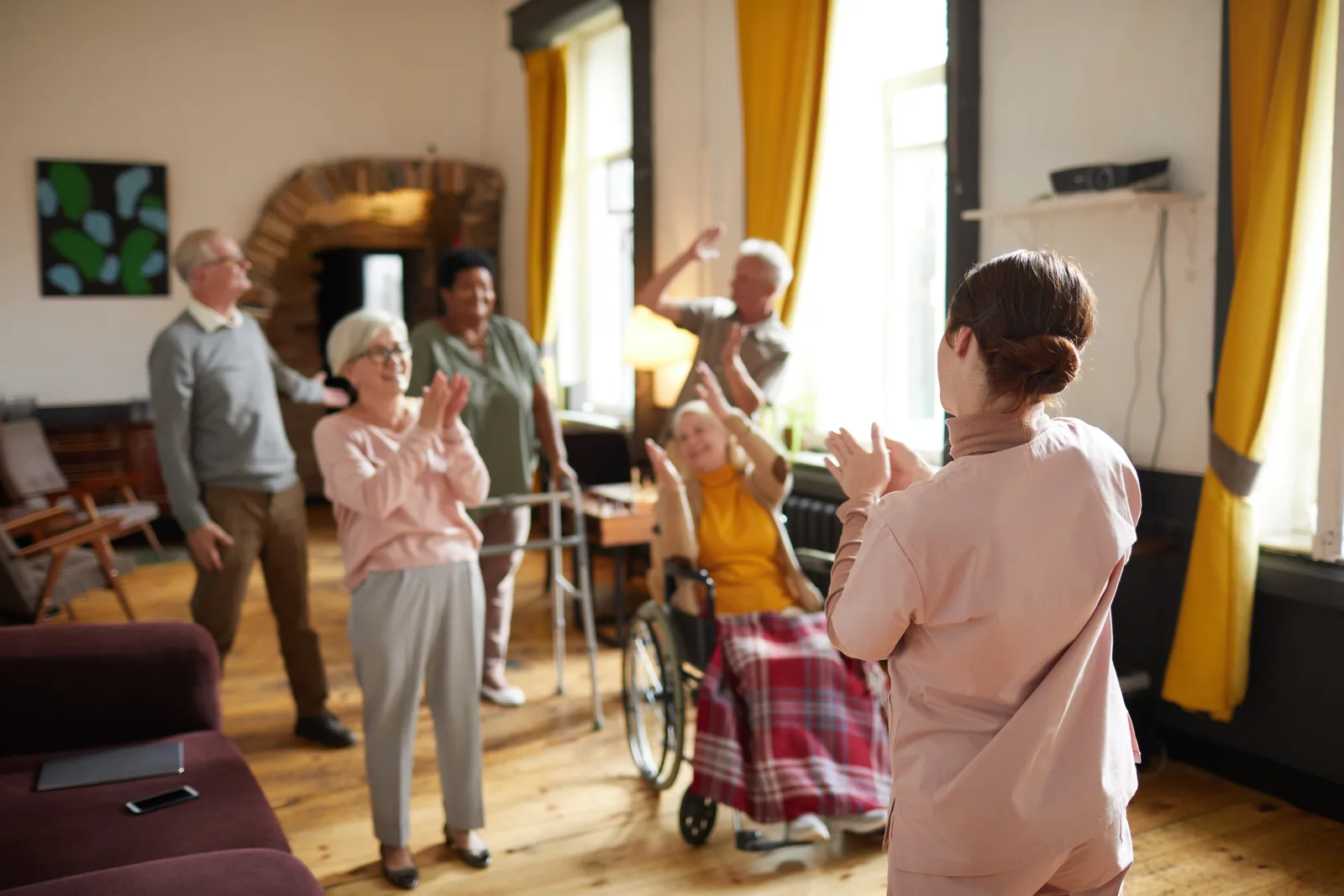
Movement remains essential at any age, but must be adapted to the physical limitations and specific risks of older adults. Effective programmes include light chair-based exercises, adapted dance or movement to music, assisted outdoor walks where possible, balance and muscle-strengthening exercises, and hydrotherapy where available.
Even simple, regularly performed mobilisation exercises can make the difference between maintaining mobility and gradually losing physical autonomy.
Creative and expressive activities
- Art and painting adapted to motor capabilities
- Music – listening, singing in a group or individually
- Reminiscence therapy – recounting and valuing personal history
- Simple practical activities: adapted gardening, tending to plants
- Theatre or expressive reading
These activities require no artistic talent – they provide a channel for emotional expression and connection with one's own identity, which is fundamental to psychological wellbeing.
The importance of personalising programmes
The most important truth about recreational activities for older adults is that personalisation makes all the difference. A standard programme, applied identically to everyone, will fail to produce the expected benefits for most participants. Every senior has a unique life story, distinct preferences, and specific needs.
The personalisation process begins with a comprehensive assessment that takes into account professional and personal history, previous hobbies and interests, current level of cognitive functioning, physical capabilities and limitations, emotional state and any depression or anxiety, and social preferences – interest in group versus individual activities.
Ongoing adjustments and feedback
Personalisation is not a one-off event, but a continuous process. Older adults' condition may fluctuate, interests can change, and new opportunities may arise. A quality programme constantly monitors each participant's response and makes proactive adjustments.
AsertivO in Otopeni employs a person-centred approach, where the multidisciplinary team – comprising geriatric physicians, physiotherapists, psychologists, and specialist activities coordinators – works together to continually create and adjust individual activity plans for each resident.
How to recognise when activities are working
For families, it can be difficult to assess whether a loved one's activity programme is truly producing positive results. However, there are clear indicators that you can observe, which will confirm that the investment of time, energy, or financial resources is worthwhile.
Positive signs to monitor
- Anticipation and enthusiasm – the person talks about upcoming activities and expresses a desire to take part
- Improved mood – you notice more cheerfulness, laughter, or positive expressions
- Better sleep – they sleep more regularly and wake feeling more rested
- Improved appetite – they eat with greater pleasure and regularity
- Increased communication – they talk more about what they are doing and share their experiences
- Maintained or improved cognitive function – preservation of memory, attention, and conversational ability
If you observe these positive changes, it means the activities have been well chosen and are bearing fruit. Their absence, or worse, a deterioration in general condition, should alert you that something in the approach needs to be adjusted.
Warning signs
On the other hand, certain behaviours should prompt you to reassess the current programme. If the person consistently refuses to participate, withdraws even further after activities, shows increased anxiety before activities, or appears more confused or fatigued after taking part, it is possible that the activities are not appropriate, or that there are unaddressed health issues that need to be investigated.
When to consult a specialist
Many families attempt to manage the activity programme for an ageing parent or grandparent on their own, which is admirable. However, there are situations in which professional expertise becomes essential to ensure both the safety and the effectiveness of interventions.
You should consider consulting or collaborating with specialists when you notice a visible cognitive decline – frequent forgetfulness, disorientation, or confusion – when complex health problems arise that require constant monitoring, when social isolation becomes severe and the person refuses any interaction, or when you, as carers, feel overwhelmed and exhausted.
The advantages of specialist professional care
- Comprehensive professional assessment by a multidisciplinary team
- Personalised programmes based on scientific evidence and clinical experience
- Constant monitoring and proactive adjustments to the care plan
- Safe and varied socialisation with people of a similar age
- Structured daily activities without placing the burden of organisation on families
- Access to specialist resources – equipment, materials, and adapted spaces
Care homes such as AsertivO - Servicii Premium Pentru Seniori in Otopeni offer not only recreational activities, but an integrated approach in which medical rehabilitation, physiotherapy, constant medical care, and personalised recreational programmes work together for the quality of life of each resident. This integration makes the difference between simple activities and a comprehensive therapeutic programme.
Frequently asked questions
How many hours of recreational activities should an older adult have each day?
There is no universal answer, but specialists recommend between 2–4 hours of structured activities per day, distributed across several short sessions adapted to the individual's attention span. The quality and relevance of the activities matters more than the duration.
My father refuses to take part in group activities. What can I do?
Refusal can have multiple causes – social anxiety, depression, unresolved hearing problems, or simply a preference for individual activities. Begin with one-to-one activities and gradually introduce a group component. Consult a geriatric psychologist for an assessment if the refusal persists.
My mother has moderate dementia. Can recreational activities help her?
Absolutely. Even people with moderate dementia benefit enormously from activities adapted to their cognitive level. Music therapy, guided reminiscence, sensory activities, and social interaction can improve mood, reduce agitation, and maintain the neural connections that remain functional.
How important is it for activities to be linked to previous hobbies?
It is very important for engagement and satisfaction. Connections with past identity and passions activate long-term memory and provide a sense of continuity and meaning. However, remain open to discovering new interests adapted to current capabilities as well.
My grandfather has limited mobility. What activities are suitable for him?
Limited mobility does not mean a lack of options. There are numerous adapted activities available: chair-based exercises, cognitive games, creative activities at a table, music therapy, structured group conversation, and even assisted walks with mobility aids. Physiotherapy can also improve current mobility.
What is the difference between activities coordination and recreational therapy?
Activities coordination focuses on entertainment and occupying time, whereas recreational therapy uses activities as therapeutic interventions with specific health objectives. Recreational therapy is personalised, monitored, and evaluated for measurable outcomes in physical, cognitive, and emotional wellbeing.
Understanding the difference between myths about recreational activities and scientifically validated truths can fundamentally transform the way you approach the care of your loved one. Activities are not a luxury or a simple pastime – they are an essential component of quality care that can prolong autonomy, improve health, and dramatically enhance quality of life in later years. Whether you choose home care or opt for specialist services, ensure that the activity programme is personalised, varied, and implemented consistently. If you have questions about activity programmes or would like a professional assessment, do not hesitate to speak with specialists in elderly care who can guide you towards the best solutions for your family's unique situation.
This article is for informational purposes only and does not replace medical advice. For specific situations, please consult a specialist.
Previous
Companion Allowance: A Complete Guide for Families
Next
Falls in the Elderly: How to Prevent Them at Home and What to Do Immediately After
Similar articles
How to Communicate Effectively with the Care Home's Coordinating Physician
3 October 2026
5 practical tips about arthrosis for family carers
29 September 2026
Rights of the Elderly Patient in Romania: What Families Need to Know
29 September 2026
Assessment Visit to a Care Home: A Complete Guide for Family Members
28 September 2026
Diabetes in Older Adults: A Practical Guide for Families
28 September 2026
Occupational Therapy for the Elderly: What It Is and How It Helps the Family
28 September 2026