
Personalised mRNA-based anticancer vaccine successfully tested against melanoma
An mRNA vaccine developed by Moderna and Merck, administered alongside Keytruda, prevented melanoma recurrence in over 1,000 patients in a phase 3 clinical trial.
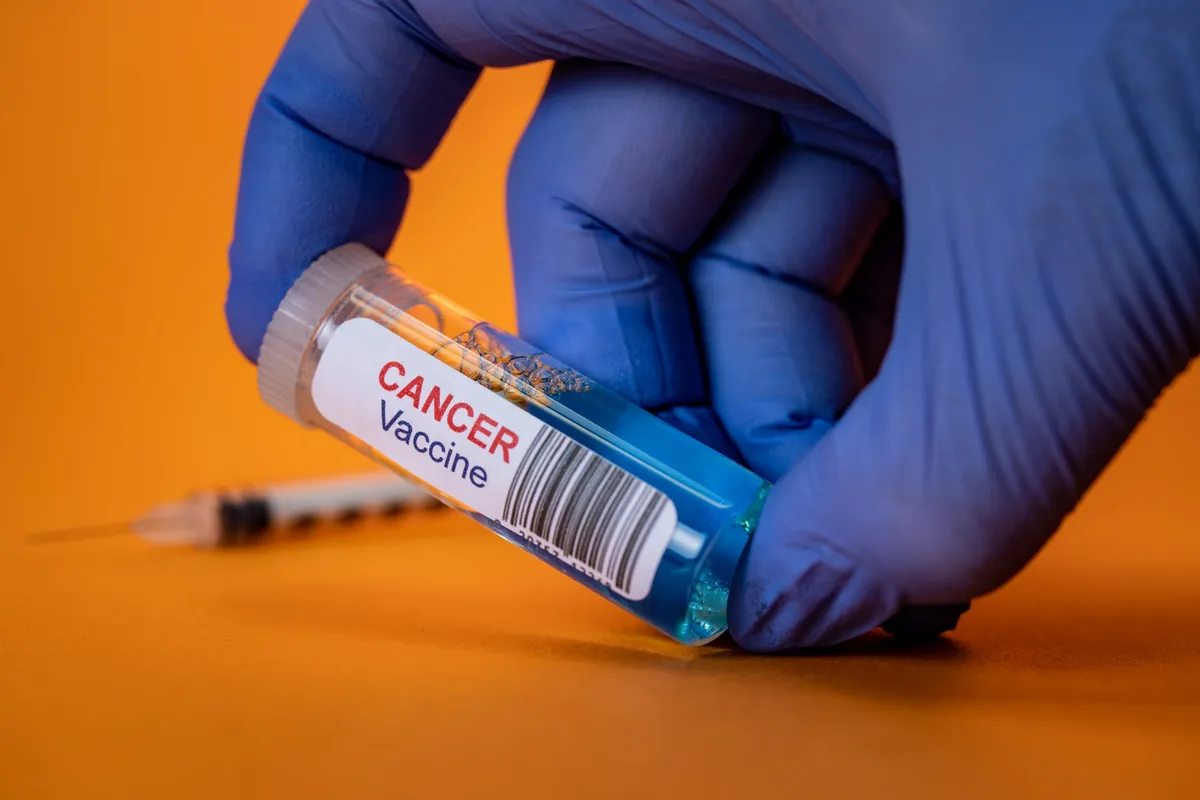
A cancer vaccine designed individually for each patient has produced positive results in a large clinical trial at its final testing phase, according to the British publication The Times. The discovery opens up prospects for a new generation of personalised treatments, with the potential to benefit thousands of patients.
The experimental vaccine is being developed by Moderna and Merck and was administered to patients with high-risk melanoma – a form of skin cancer – immediately after surgical removal of the tumour. The treatment was combined with Keytruda, an immunotherapy drug already used within the British health system for approximately 12 types of cancer.
According to the companies, the combination of the two treatments significantly extended the period during which patients remained free of cancer cells, compared with Keytruda alone, and reduced the risk of the disease spreading to other organs.
What the study demonstrated
More than 1,000 patients took part in the phase 3 trial, all of whom had their melanomas surgically removed prior to enrolment in the study. The companies have not yet published detailed results, but have stated that the trial met both its primary objective – improving recurrence-free survival – and an important secondary objective, preventing the spread of cancer throughout the body.
Stéphane Bancel, Moderna's chief executive, stated that the results represent "a decisive moment for the field of cancer research." He added: "For many years, the idea of creating an mRNA-based treatment specifically designed for an individual patient's cancer was an aspiration. We are now helping to turn that vision into reality."
How the vaccine works
The treatment is based on mRNA technology, which became widely known through Covid-19 vaccines. The key difference is that this vaccine does not prevent an infection; rather, it is manufactured individually for each patient.
Following surgery, researchers analyse a sample from the tumour to identify mutations specific to that patient's cancer cells. These mutations are then encoded into mRNA strands, producing a vaccine intended to "teach" the immune system – in particular the T cells that destroy cancer cells – to recognise and eliminate any remaining tumour cells in the body.
Manufacturing a single dose takes approximately six weeks, during which time patients are already undergoing treatment with Keytruda, so that the personalised vaccine is ready for subsequent administration.
Previous results and future research
An earlier, smaller study showed that the combination of the vaccine and Keytruda reduced the risk of melanoma recurrence or patient death by 49%, compared with Keytruda treatment alone. The risk of the disease spreading to other parts of the body, or the risk of death, was also reduced by 59%.
Moderna and Merck are currently testing similar personalised vaccines for lung, bladder, and kidney cancers.
Outstanding questions
Several important aspects remain to be clarified: the true extent of the therapy's benefits, any potential side effects, and the cost and complexity of manufacturing a personalised vaccine for each individual patient.
Should the treatment receive regulatory approval, Moderna hopes it could reach patients as early as next year.
Professor Georgina Long, from the University of Sydney, the study's principal investigator and medical director of the Melanoma Institute Australia, described the results as "a landmark moment." She noted that the combination of the vaccine, named Intismeran, and Keytruda "has the potential to establish a new therapeutic paradigm" that could help patients remain cancer-free for a longer period of time.
The companies will present further details at a medical conference scheduled later this year. Researchers and investors are awaiting broader information on the treatment's efficacy and side effects. High costs could limit patient access to the drug, should it receive definitive regulatory approval.
Content paraphrased and adapted by SeniorHelp from verified public sources.
Original source: Digi24 →Previous article
Bolojan: the decision regarding social scholarships during the summer holiday has not yet been finalised
Next article
Health Unions Threaten Strike Over Pay Act
Similar news

Osteodensitometria DXA: cum se evaluează densitatea osoasă și riscul de fractură
13 October 2026

Inflamația cronică poate afecta inima înainte de simptome, arată un studiu pe 488.000 de persoane
13 October 2026

Hepatitis A in Constanța: 23 outbreaks, 130 cases, under DSP monitoring
12 October 2026
 Foto ilustrativă
GPs warn: flu vaccination should not be delayed
11 October 2026
GPs recommend flu vaccination before the epidemic spreads
11 October 2026

Depression in the elderly, mistaken for ageing: what signs to look out for
11 October 2026