
Negrescu: The New EU Budget Proposed by Costa, a Major Risk for Romania's Finances
Victor Negrescu warns that the proposed EU budget for 2028–2034 cuts over 200 billion euros, affecting cohesion, agriculture, research, and healthcare. He calls for a unified national position.
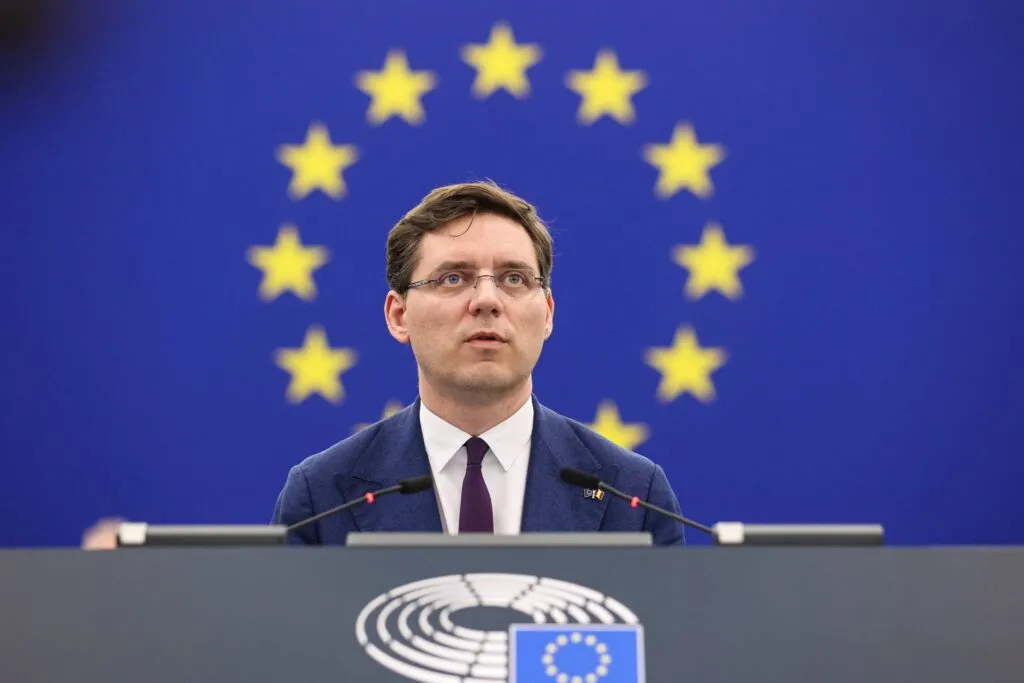
Victor Negrescu, Vice-President of the European Parliament, warned in a Facebook post published on Saturday that the new proposal for the European Union budget for the period 2028–2034 represents a major risk for Romania's finances and its investment capacity. The PSD MEP criticised the cuts proposed by European Council President António Costa and called on Romanian authorities to adopt a common position in the negotiations for the future European budget.
"The new proposal for the 2028–2034 European budget represents a major risk for Romania's finances and our investment capacity," Negrescu wrote.
According to him, the new draft envisages a budget of approximately €1,582 billion (at constant 2025 prices), more than €180 billion less than the European Commission's initial proposal and nearly €40 billion below the version discussed in October. In current prices, the proposed budget falls from €1,984.9 billion to €1,780.9 billion, a reduction of approximately €204 billion.
"I appreciate the effort of European Council President António Costa to bring member states' positions closer together ahead of next week's European summit. But Romania needs a budget that allows it to continue developing, not one that limits its opportunities," the MEP stated.
Cuts to cohesion and research
Negrescu explained the possible effects of the new proposal on our country: "More pressure on development funds. European cohesion funding falls to approximately €402 billion, and the Interreg programme, which is important for cross-border cooperation, loses over €1 billion compared to the Commission's proposal. Romania needs these resources for motorways, hospitals, local infrastructure, and reducing regional disparities. It is essential that we maintain distinct funds and guarantees for less developed communities."
In the area of agriculture, support for farmers' incomes would remain at €261 billion, whilst the European agricultural crisis reserve would be reduced to €3.9 billion. "As rapporteur, I secured the support of the European Parliament's Committee on Budgets for an agricultural budget of €433 billion. I continue to call for separate funding for rural development and fair subsidies for Romanian farmers," Negrescu specified.
The MEP also criticised the proposed cuts to education, research, and health. The Erasmus+ budget would fall from €36.2 billion to €34.7 billion, whilst research would lose nearly €15 billion compared to the initial proposal. "Less money for education, research, and health than the European Commission had proposed. Erasmus+ receives €34.7 billion, compared to €36.2 billion in the initial proposal. Research loses nearly €15 billion, and health still does not have a standalone European programme. Through my report in the Committee on Public Health, I called for at least €20 billion for health. Romania needs European investment for universities, hospitals, researchers, and young people," Negrescu stated.
Black Sea included in the proposal
Negrescu also highlighted a positive aspect of the document: the explicit inclusion of the Black Sea region among European priorities. "A step forward for Black Sea security. Following the initiatives and amendments I have championed, the region is explicitly mentioned in the proposal, including for military mobility and support for border regions. It is important that this recognition be followed by funding for strategic infrastructure and security projects in Romania," he said.
The Vice-President of the European Parliament also called for the retention of a distinct European Social Fund worth €124 billion: "This week I initiated an open letter, supported by European social-democratic leaders and MEPs, in which we call for a distinct European Social Fund of €124 billion. We cannot allow funding for jobs, vocational training, and combating poverty to depend on competition with other budgetary priorities."
Reservations about new European taxes
Negrescu expressed reservations about the proposal for a 3% tax on certain digital services provided by large companies, warning of the possible effects on Romania's digital economy. He also criticised the fact that his proposal regarding the taxation of online gambling had not been included, arguing that the revenue generated could be directed towards education and the protection of young people.
"A questionable approach to new European taxes. I regret that my proposal regarding the taxation of online gambling, supported by MEPs from several political groups, was not included. We need European instruments to combat illegal platforms and collect revenue from operators in this sector — money that we can direct towards education and the protection of young people. Instead, a 3% tax is being proposed on certain digital services provided by large companies. Romania must be very mindful of the effects such a measure could have on the competitiveness of the digital economy, a sector that contributes approximately 6.7% to the country's GDP," Negrescu stated.
Call for a common Romanian position
Negrescu believes that the Government, Romania's representatives in European institutions, local authorities, farmers, the business community, and social partners must all support common priorities in the negotiations for the 2028–2034 budget. "Now is the time for serious political and institutional coordination at Romania's level. This is not merely a discussion about how much Romania will receive from the European budget, but also about what investments we will be able to make, which programmes will be protected, and who will decide how the funds are used," the MEP emphasised.
"We need a clear national position, European alliances, and firm negotiations. Romania cannot afford to lose development opportunities. Every billion euros counts!" Victor Negrescu concluded.
Content paraphrased and adapted by SeniorHelp from verified public sources.
Original source: Mediafax →Previous article
HPV Vaccination: Romania Among Europe's Laggards, Despite Its Role in Preventing Cervical Cancer
Next article
COPD, the lung disease that progresses "in silence": 1 in 10 Romanians could be affected
Similar news

Deputy Ramona-Ioana Bruynseels, Vice-President of a Sub-Committee in the NATO Parliamentary Assembly
22 November 2026
How you can find out online how much money you will receive in retirement, before submitting your application
22 November 2026

CNAS and Unifarm Exchange Data to Prevent Medicine Shortages in Pharmacies
20 November 2026
Minimum Wage for 2027: Trade Unions and Employers Reach No Agreement After Negotiations at the Ministry of Labour
20 November 2026
 Foto ilustrativă
Early retirement at 55 in Romania: who is entitled to this right under the law
20 November 2026
Minimum Wage 2026: unions demand 5,000 RON gross, employers' associations push for lower taxes
20 November 2026