
How to maintain an active social life: practical steps
Discover practical and accessible strategies to help your beloved seniors maintain social connections and fulfilling activities, with the support of family and community.

Contents
For many older adults, retirement and the physical changes that come with age can quietly lead to a withdrawal from social life as well. This can mean fewer outings with friends, increasingly rare meaningful conversations, and, gradually, an isolation that affects both emotional wellbeing and physical health. Recent studies show that social isolation in older adults is associated with increased risks of depression, cardiovascular disease, and even accelerated cognitive decline.
As a family, we know that our parents and grandparents deserve a life full of joy, connection, and fulfilling activities. But how do we find the resources, time, and energy to support them in maintaining an active social life, especially when our own schedules are demanding? And how do we recognise the signs that a loved one needs more support?
This article offers practical answers and concrete steps you can take, whatever your situation. Whether your parent lives independently or you are looking for an environment that provides both medical care and opportunities for socialising, you will find specific, compassionate strategies here.
Contents
- Why social life matters for older adults
- Signs that a loved one is becoming isolated
- Concrete steps to encourage socialising
- Practical activities suited to older adults
- The family's role in maintaining social connections
- How community spaces and day centres can help
- When residential care becomes the right solution
- Frequently asked questions
Why social life matters for older adults
Social life is not a luxury or an optional extra – it is a fundamental human need, regardless of age. For older adults, social connections act as a protective shield against cognitive and physical decline. Regular conversation stimulates memory and thinking, whilst group activities keep people motivated to move, look after themselves, and stay engaged.
Research in gerontology consistently shows that older adults with an active social life enjoy a significantly better quality of life. They report less anxiety, sleep better, and have a more resilient immune system. Conversely, prolonged isolation can lead to depressive symptoms, mental confusion, and even an acceleration of chronic conditions.
The concrete benefits of socialising
- Improved mental health: social conversations and activities reduce the risk of depression and anxiety
- Cognitive stimulation: regular interaction keeps the brain active and reduces the risk of dementia
- Motivation for self-care: social engagements encourage attention to personal appearance and daily routine
- Emotional support: friends and acquaintances provide a sense of belonging and security
- Physical activity: group activities involve movement and mobility, both of which are essential for physical health
Signs that a loved one is becoming isolated
Social isolation does not appear overnight – it is a gradual process, often invisible at first glance. As a family, it is important to watch for certain signals that indicate our parent or grandparent is withdrawing from social life and may need additional support.
Many of these changes can seem normal or be attributed to natural ageing, but taken together they should prompt our attention and lead us to act preventively.
Common warning signs
- Repeatedly declining invitations: if a loved one consistently refuses to attend family events or meet with friends, without clear medical reasons
- Declining interest in hobbies: abandoning activities that once brought them joy – reading, gardening, attending church
- Neglecting personal appearance: self-care becomes inconsistent; clothes are frequently dirty or inappropriate for the occasion
- Changes in sleep and appetite: sleeping too much or too little, eating irregularly, or losing interest in food
- Persistent sadness or irritability: negative moods that last for weeks at a time
- Lack of energy and motivation: constant fatigue, boredom, and an absence of plans or positive expectations
Concrete steps to encourage socialising
Once you have identified the need, the important part comes next: taking action. Radical changes are not necessary – small, consistent gestures often have the greatest impact. Here are some steps you can put into practice starting tomorrow.
Start with open conversations
The first step is to talk with your loved one about what you have noticed, without judgement or criticism. Ask how they are feeling, what they feel is missing, whether they would like to see certain people more often or take part in certain activities. Listen with empathy – fear of being a burden, mobility issues, or simply a lack of energy may be barriers you can address together.
Create a weekly plan of social activities
- Schedule regular visits: set fixed days for visits – Tuesday evening for dinner, Saturday afternoon for a walk
- Facilitate connections with friends: organise meetings with old friends and offer transport if needed
- Encourage participation in community activities: book clubs, prayer groups, painting or music classes
- Use technology: set up regular video calls with relatives in other cities, and teach them to use simple messaging applications
Be realistic and flexible
Not every day is the same. Respect the moments when your loved one does not feel up to socialising, but continue to gently encourage a return to activities. Pay attention to their energy levels and health, and adjust plans accordingly.
Practical activities suited to older adults
Not all social activities are right for every older adult. Age, mobility, health, and personal preferences all matter enormously. Here are some categories of activities that can be adapted to a range of needs and abilities.
Low-impact activities
- Book clubs or themed discussion groups: intellectual stimulation without intense physical effort
- Board games: backgammon, rummy, chess – excellent for socialising and cognitive engagement
- Creative activities: painting, drawing, pottery, or knitting in a group setting
- Music and gentle movement: listening to favourite music, singing in a choir, simple dance movements
Activities that involve movement
- Walks in the park or botanical garden: fresh air, nature, and relaxed conversation
- Senior fitness classes: age-adapted sessions to maintain flexibility
- Communal gardening: a therapeutic activity with both physical and social benefits
Community-oriented activities
Many older adults rediscover a sense of purpose through helping others. Age-appropriate volunteering – such as reading stories to children, knitting for charitable organisations, or mentoring young people – offers not only socialisation but also a profound sense of usefulness.
The family's role in maintaining social connections
Family is the central pillar in supporting the social lives of older adults. Even when we cannot be physically present every day, we can facilitate connections, organise activities, and remain attentive to their evolving needs.
Strategies for busy families
We understand that you have responsibilities of your own – work, children, household. Here is how you can contribute without burning out:
- Share responsibilities with other family members: each sibling, cousin, or grandchild can take on a day or an activity
- Use transport services for older adults: local organisations often offer transport to social activities
- Create simple, consistent traditions: Sunday dinner, Saturday walks, an evening phone call
- Involve your children: grandparents love spending time with grandchildren, and for children it is a lesson in empathy and living history
Recognise your own limits
Sometimes, despite every effort and intention, we simply cannot provide all the support our loved one needs on our own. This is not a failure – it is the reality for many modern families. Acknowledging this and seeking complementary solutions is a sign of genuine responsibility and love.
How community spaces and day centres can help
Day centres for older adults and community programmes can be excellent solutions to complement family support. They offer structured activities, consistent socialisation, and professional supervision, all without the older person having to leave their home permanently.
Day centres typically provide transport, balanced meals, recreational and therapeutic activities, as well as basic medical monitoring. Older adults can meet others in similar situations, share experiences, and develop new friendships.
What to look for in a day centre
- Flexible scheduling: the option to attend a few days per week rather than daily
- Qualified, empathetic staff: verify the qualifications and attitude of the team
- Variety of activities: from physiotherapy to creative arts – every older adult should find something that interests them
- A clean, safe, and welcoming environment: the physical surroundings have an enormous impact on wellbeing
When residential care becomes the right solution
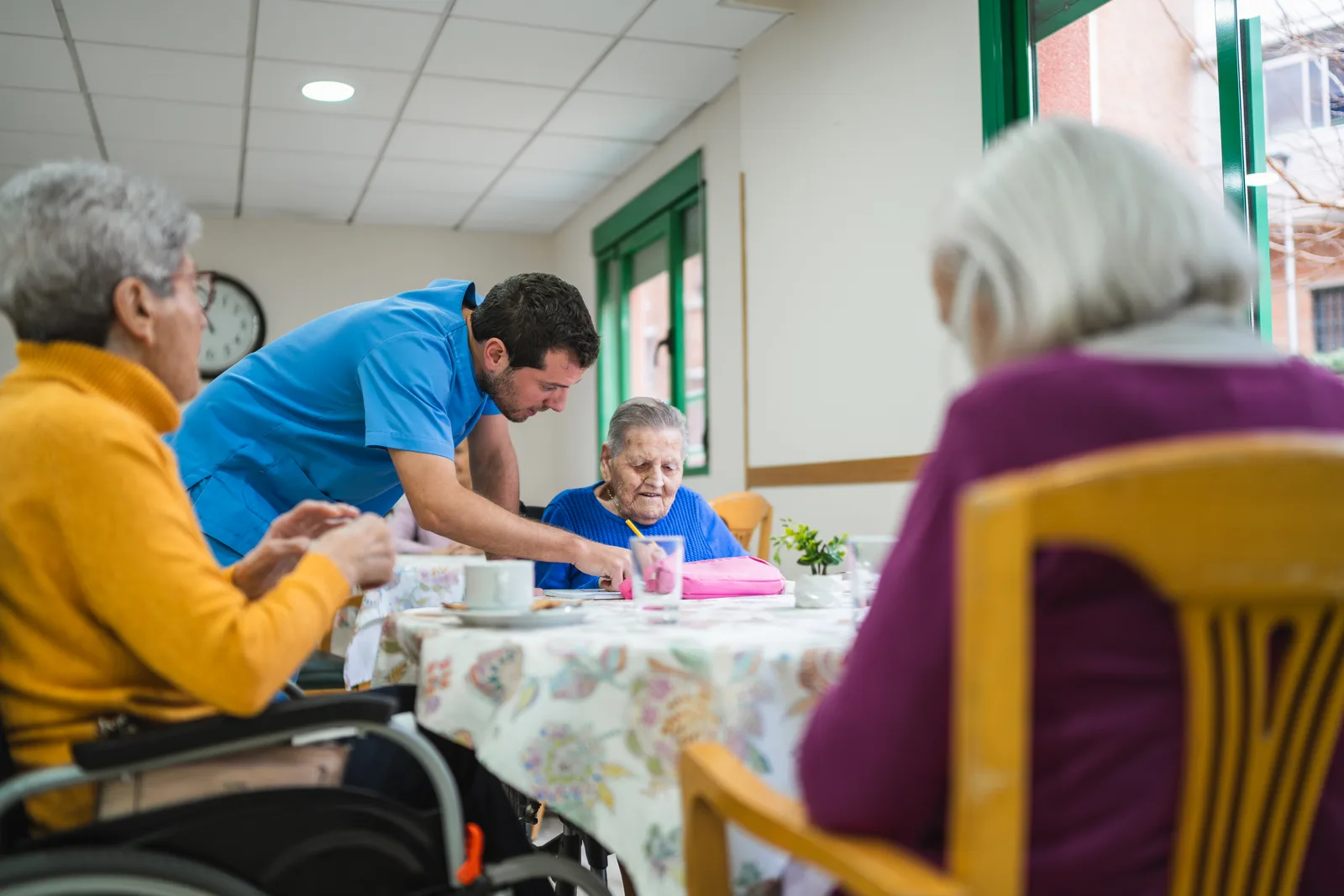
There are times when, despite all efforts, home care and day centres are no longer sufficient. Perhaps a parent requires constant medical supervision, perhaps their mobility has declined significantly, or perhaps isolation persists in spite of every intervention. In these cases, residential care centres for older adults can offer not only medical care, but also a vibrant social environment.
At the Centrul rezidențial pentru seniori Maria-Theresia Șura Mică, for example, social life is integrated into the care philosophy. Residents benefit not only from round-the-clock medical care and comfort, but also from daily organised activities – from gentle gymnastics and occupational therapy to musical evenings, creative workshops, and shared celebrations of important occasions. This approach recognises that health means more than the absence of illness; it also means emotional wellbeing and human connection.
How to choose a residential centre with an active social life
- Visit in person: observe the interactions between residents and staff, and take in the general atmosphere
- Ask about the activities programme: does it exist only on paper, or is it genuinely implemented on a regular basis?
- Talk to current residents and their families: ask whether they feel socially fulfilled
- Check the staff-to-resident ratio: adequate staffing means time for conversation and individual attention
- Assess the communal spaces: are there inviting areas where residents can socialise – a garden, a lounge, a library?
The transition to a residential centre
Moving into a residential centre is a major decision and an emotional transition. Involve your loved one in the process, visit several options together, and discuss fears and expectations openly. Many older adults discover, after a settling-in period, that a residential environment actually offers more social stimulation and independence than they had at home, where isolation had become chronic.
Modern centres such as the one at Șura Mică are designed to preserve the dignity, autonomy, and individuality of each resident, whilst also providing the security of medical care and the richness of community life.
Frequently asked questions
How often should I visit a parent in a residential centre?
There is no strict rule, but consistency matters more than frequency. Short, regular visits (for example, twice a week) are often more beneficial than occasional long ones. Talk with your parent and adjust based on their needs and your own availability.
How do I encourage a parent to take part in social activities when they keep refusing?
Start with small activities, ideally ones connected to their previous interests. Take them yourself the first time and stay with them if needed. Social anxiety or fear of rejection can be significant barriers – a familiar presence can give them the confidence to give it a try.
Is it normal for a parent to feel sadder after retiring?
The transition into retirement can be genuinely difficult – the loss of a professional identity and the social routine of the workplace are real challenges. Temporary sadness is normal, but if it persists for weeks or worsens, it is important to consult a psychologist or psychiatrist with expertise in gerontology.
Can older adults with mobility difficulties still have an active social life?
Absolutely. Reduced mobility calls for adaptations, not social exclusion. Activities can be brought to them – home visits, video calls, online book clubs. Modern centres are equipped with accessible facilities and activities adapted to varying levels of mobility.
How much does a day centre for older adults generally cost?
Costs vary considerably depending on the region and services offered, but in Romania, a day centre typically costs between 800 and 2,000 RON per month. Some local councils and non-profit organisations also offer subsidised options. It is worth researching what is available in your area.
What do I do if a parent categorically refuses a residential centre?
Respect their decision, but keep the conversation open about needs and solutions. Sometimes the reluctance stems from unfamiliarity – an exploratory visit with no commitment attached can shift their perspective. First explore intermediate options: a home carer, a day centre, or telecare support. Return to the subject periodically as needs evolve.
Maintaining an active social life for our parents and grandparents is a responsibility we share as a family, but one we do not have to carry alone. Whether it means organising regular visits, enrolling a loved one in a day centre, or exploring modern residential options that integrate care with social engagement, every step counts. If you feel the situation is becoming overwhelming, or that your loved one needs more support than you can provide, do not hesitate to speak with a specialist or to explore centres such as the Centrul rezidențial pentru seniori Maria-Theresia Șura Mică, where multidisciplinary teams can offer both medical care and an enriching social environment.
This article is intended for informational purposes only and does not replace medical advice. For specific situations, please consult a qualified specialist.
Previous
Respite Care for the Elderly: What It Is and How to Find It
Next
How to Prepare Your Care Home Admission File: Documents, Steps and Common Mistakes
Similar articles

How to Manage a Hypoglycaemic Crisis in an Elderly Person: Signs and Solutions
14 September 2026

How to Manage Breathing Difficulties in an Elderly Person at Home: When to Call 112
13 September 2026

How to Manage the Financial Stress of Caring for an Elderly Relative
12 September 2026

How to Tell Your Parent a Serious Diagnosis: A Complete Guide
9 September 2026
Trial Period at a Care Home: What to Look Out for in the First 30 Days
8 September 2026

Nocturnal Agitation in Elderly People with Dementia: A Practical Guide
7 September 2026